The challenge
MONA Museum in Tasmania puts a device in every visitor's hand — at the time, a fleet of over 1,200 iPods running an Art Processors tour guide. For that guide to work, the content had to change with the room the visitor was standing in, at gallery-space resolution, everywhere in the building. The museum itself had to be instrumented. Art Processors engaged us on both halves of that problem: location tracking with beacons, and a custom charging system for the fleet.
What we built
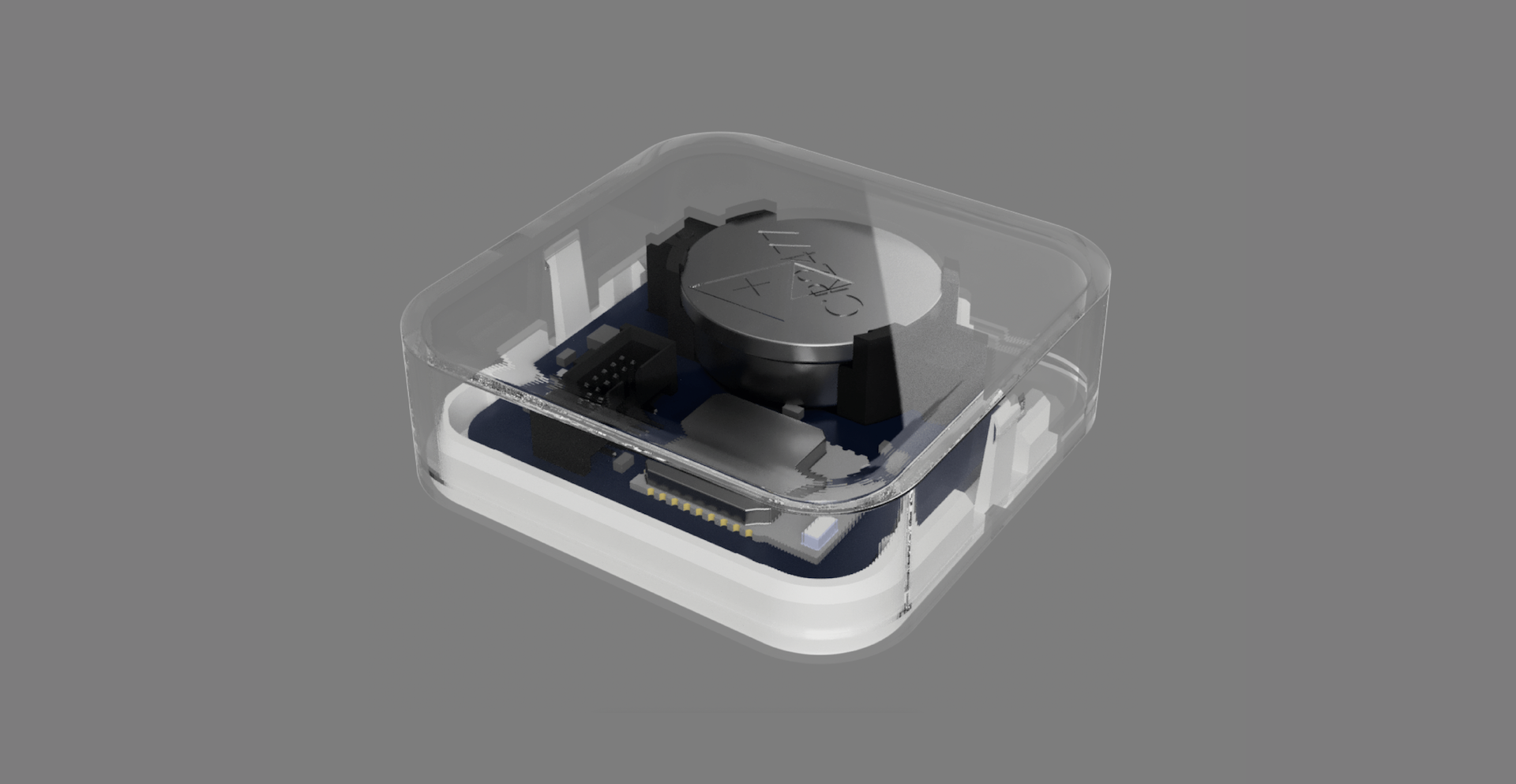
AP Locate is the beacon system that answered the location half. We developed Bluetooth location anchors — a Bluetooth module and a button cell — positioned throughout the gallery spaces, with the visitor's device triangulating its position off them and triggering content load and guide feedback as it moved. We did the PCB design and the firmware, and the beacons delivered location services to the iOS application.
Nothing to build on
This was 2012. The Bluetooth SIG had no location standard: angle-of-arrival and the sounding-based methods that underpin today’s Bluetooth location services came years later. Ultra-wideband was not a practical option either — DecaWave’s parts were early, and consumer trackers like AirTags were still most of a decade away. With nothing to build on, the approach had to be devised from scratch.
Power and package
We manufactured and deployed three hundred beacons in the first run, against a museum schedule. Two problems were hard. The first was power optimisation: the anchors run on a button cell and are scattered across a large estate. The second was mechanical integration, into an ultra-small form factor.
Still running
Writing in November 2017, five years into the MONA partnership, we reported that all of the original mass iPod charging hardware we developed, assembled and tested for the same program was still in operation, serving 100,000+ visitors to MONA Museum each year — and that we were at that point working with Art Processors to update it.
Where it went
Art Processors later moved the estate onto off-the-shelf beacon hardware as the market caught up. That was the right call: their business is content and systems, not hardware manufacture, and going off-the-shelf removed the overhead of managing a hardware deployment. A descendant of that platform runs in cultural spaces worldwide today, and the beacon work was the technological stepping stone underneath it.