
Consumer
Box Altitude
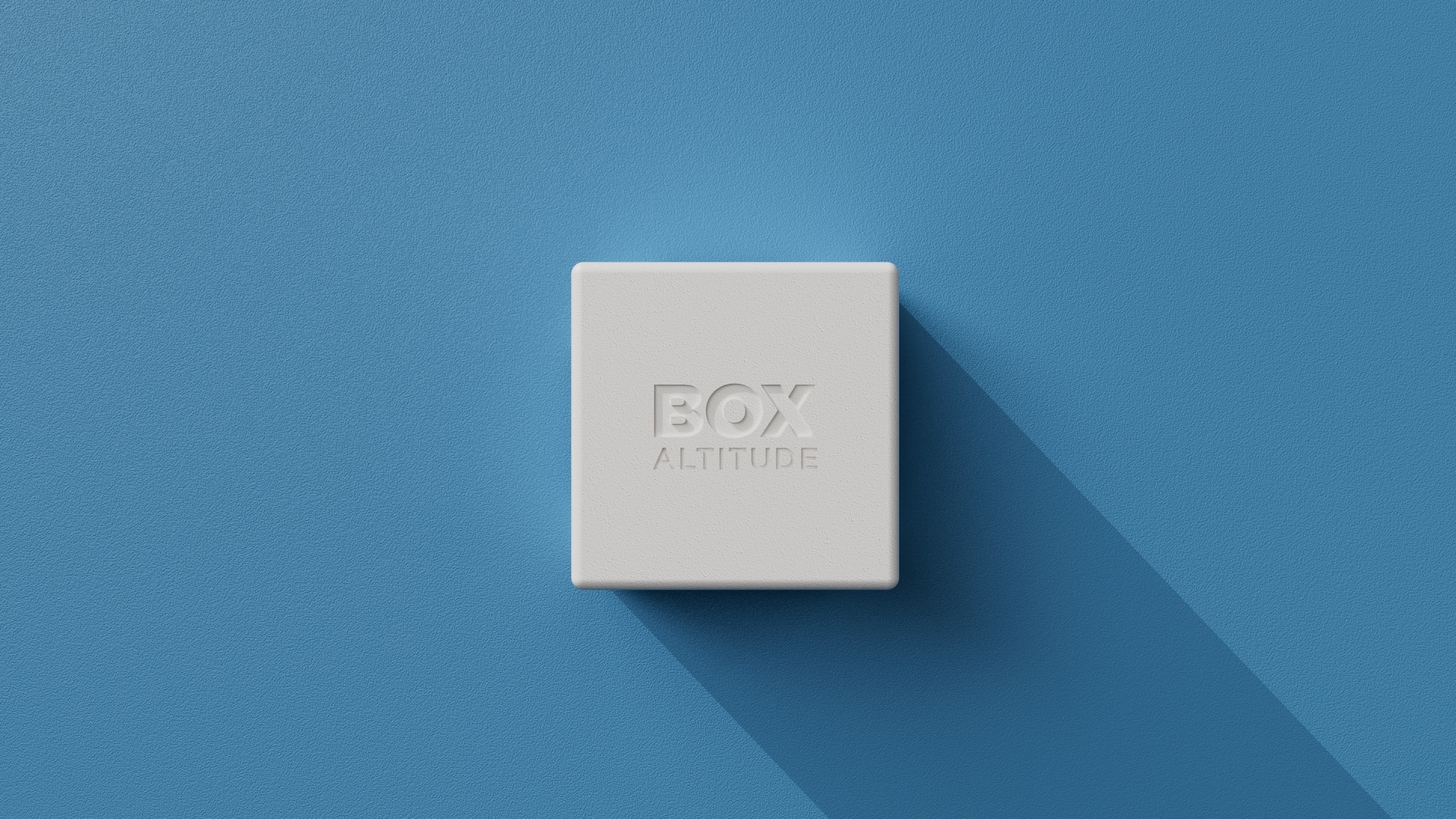
Box Altitude's first-generation hypoxic trainer ran open loop: you set the compressor by hand for a duration, and nothing measured the altitude the room reached. The company brought us that prototype in 2021. We closed the loop — sensing, control, app and cloud — and manufactured 120 kits.
The challenge
Box Altitude makes altitude training systems: hypoxic tents and rooms that simulate thin air for athletes. What arrived in 2021 was an early prototype built around a compressor — no app, no cloud, no feedback. You chose a compressor setting and a run time, and nothing in the room reported what altitude that produced. The founder, a former professional road bicycle racer, knew the industry well, and needed the product to become a real closed-loop system: set an altitude, hold it.
Developing the solution
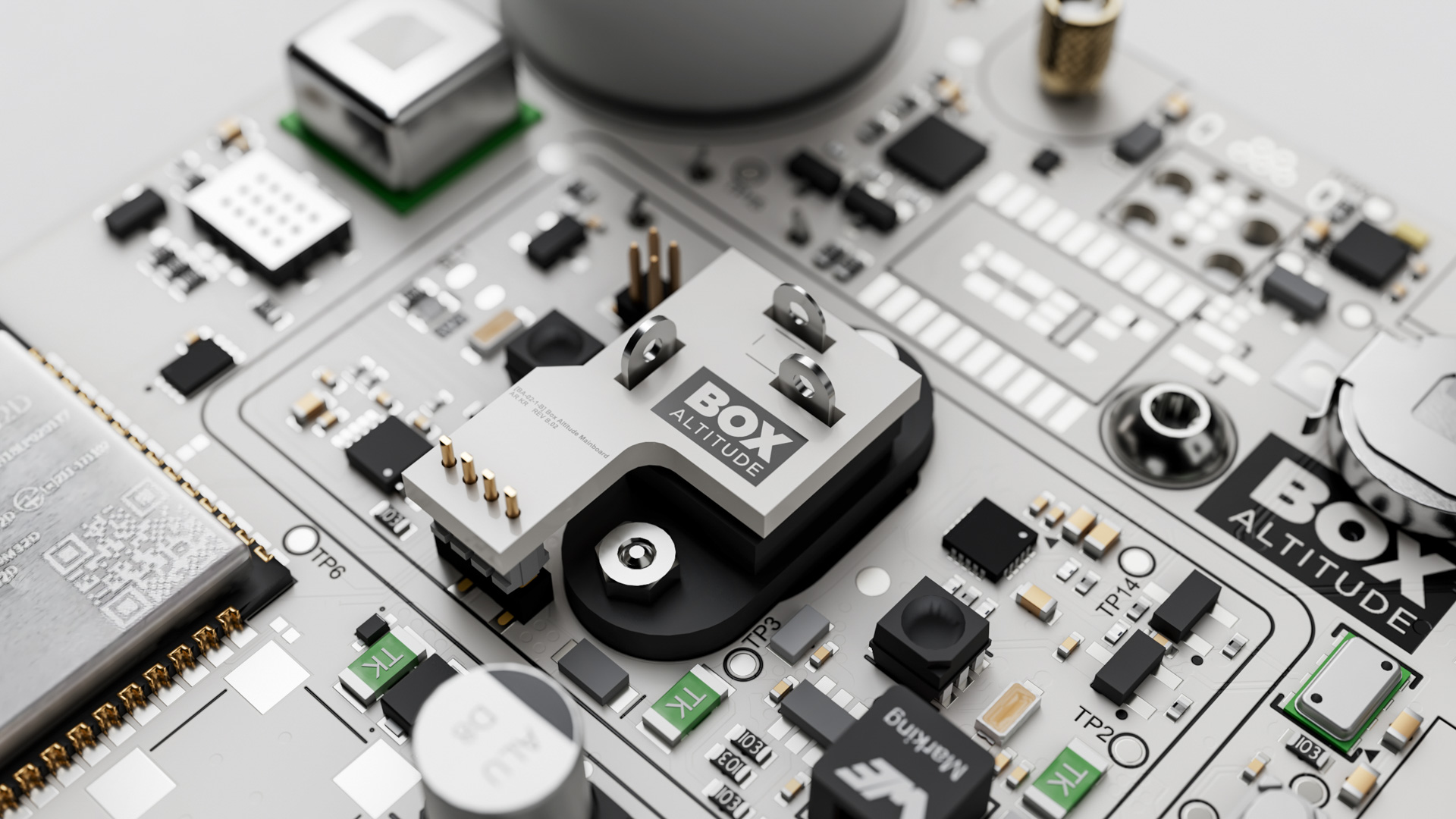
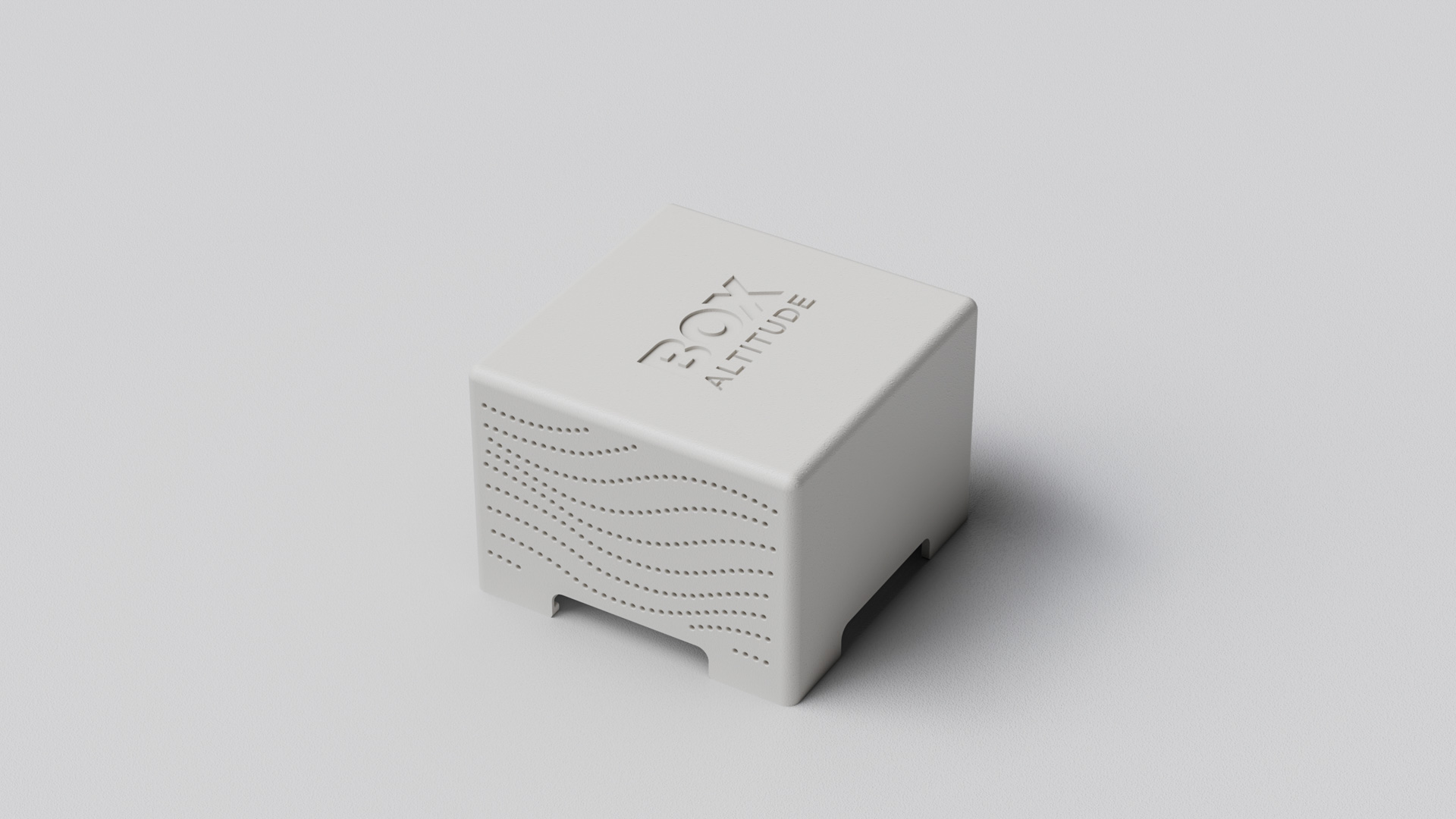
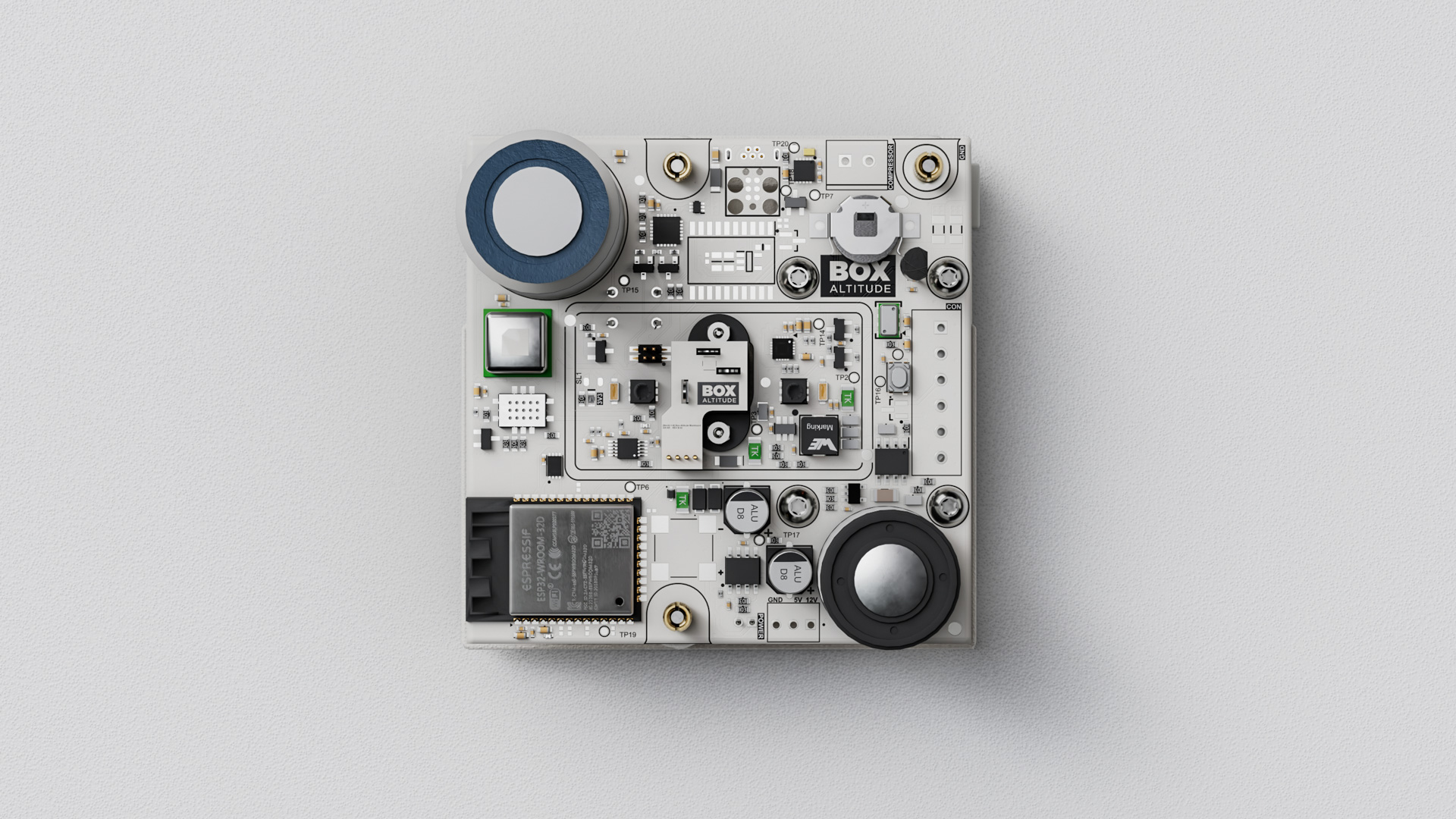
We built the Wi-Fi sensing and reporting layer, with cloud backhaul, that linked sensor to compressor and closed the loop around the room. The sensing unit, the compressor controller, the firmware, the app and the cloud were ours; the compressor itself was off the shelf. Firmware on both units runs on ESP32, over the Espressif Wi-Fi stack. We did the industrial design, electronics and housings for both units, and helped the client source and work with the third-party assembler that retrofitted the controllers into the compressors.
The sensing unit
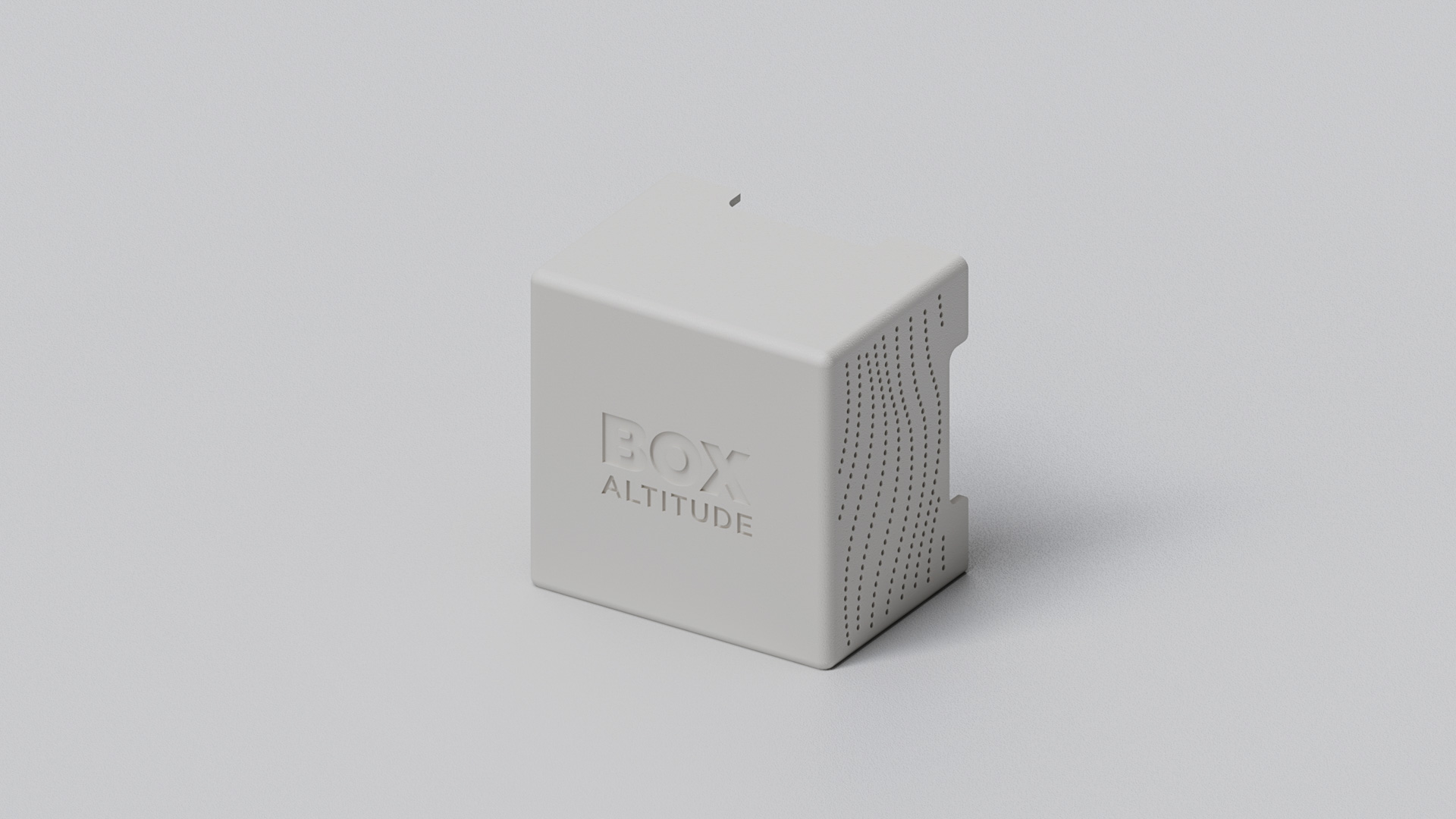
Multiple oxygen sensors sit in one enclosure alongside carbon monoxide and carbon dioxide sensing, with the algorithms that convert those gas readings into an altitude equivalent. The unit can be wall-mounted or simply placed in the tent or room it is measuring.
The compressor controller
Rather than design a second product, we built the controller as a variant of the sensor platform: shared firmware, shared Wi-Fi stack, sensor input on one build and control output on the other. The compressor installs outside the building as a fixed commercial or home install, or alongside a temporary training environment.
Remote diagnostics and field support
The hardest part was field support. Early trial units went to homes and gyms in Italy — to an investor and to hill-climbing teams — on domestic and professional Wi-Fi nobody at our end could see, at a very early stage of product maturity. Each install had to adapt to whatever network it landed on, with little local support. So we built analytics, logging and remote diagnostics into the product far earlier than a prototype would normally carry them, and used them to find what was failing on the far side of the world. It accelerated the trials, and left a rule we still work to: the more mature the product, the further from your base of support you can send it.
Manufacture
The programme ran as a turnkey development through multiple phases to a commercial level, ending with us manufacturing 120 sensor and compressor electronics kits, fully provisioned and tested, ready for the assembler to integrate into finished systems.
The app and the cloud
The first-generation product had no app and no cloud, so this half of the system did not exist before the programme. We wrote the mobile application and built the IoT cloud behind it. The Box Altitude App runs on iOS and Android, and it is where an athlete sets the altitude to be simulated, schedules and monitors a session, and logs training against it. It is also the first place the system ever showed a user what altitude a room was at, because the altitude equivalent computed in the sensing unit finally had somewhere to go. The cloud carried sensor readings and controller state, and it is what made the field work possible: an install in Europe could be read, and debugged, from our Abbotsford office in Melbourne. Box Altitude announced its second-generation sensor and app in July 2022.
About the client
Box Altitude was founded in St Kilda, Melbourne in 2019 and sells to home users, gyms and performance facilities as well as to professional sport, including cyclists preparing for the Tour de France. Its range today is built around the Box Altitude Sensor, the F10 and F20 Altitude Generators and the Box Altitude App, sold through regional contacts in the United States, Europe, Norway, France and Switzerland alongside the Australian head office — the distribution network we supported with service and diagnostics.
Ready to reach out?
If you have an electronic product idea but lack the knowledge, time or resources to make it happen, we can help.
↑ Back to top