The challenge
In 2019 Bunnings wanted to know whether AI voice control had matured far enough to change how staff talk to each other across a store. Working with the design and innovation agency AKQA, Tekt was engaged to build an AI-driven SIP and VoIP intercom system for enterprise staff communications: a staff member wearing a device initiates a point-to-point call to a colleague anywhere on the store network with a spoken command, with no handset to dial and no channel to select.
The commercial question sat underneath the technical one. Off-the-shelf staff communication systems already existed, with a proven commercial offer and low-risk scale behind them. AI voice control promised something better if it was ready. The point of the engagement was to find out at the cost of a proof of concept rather than at the cost of a product programme.
The work
The system
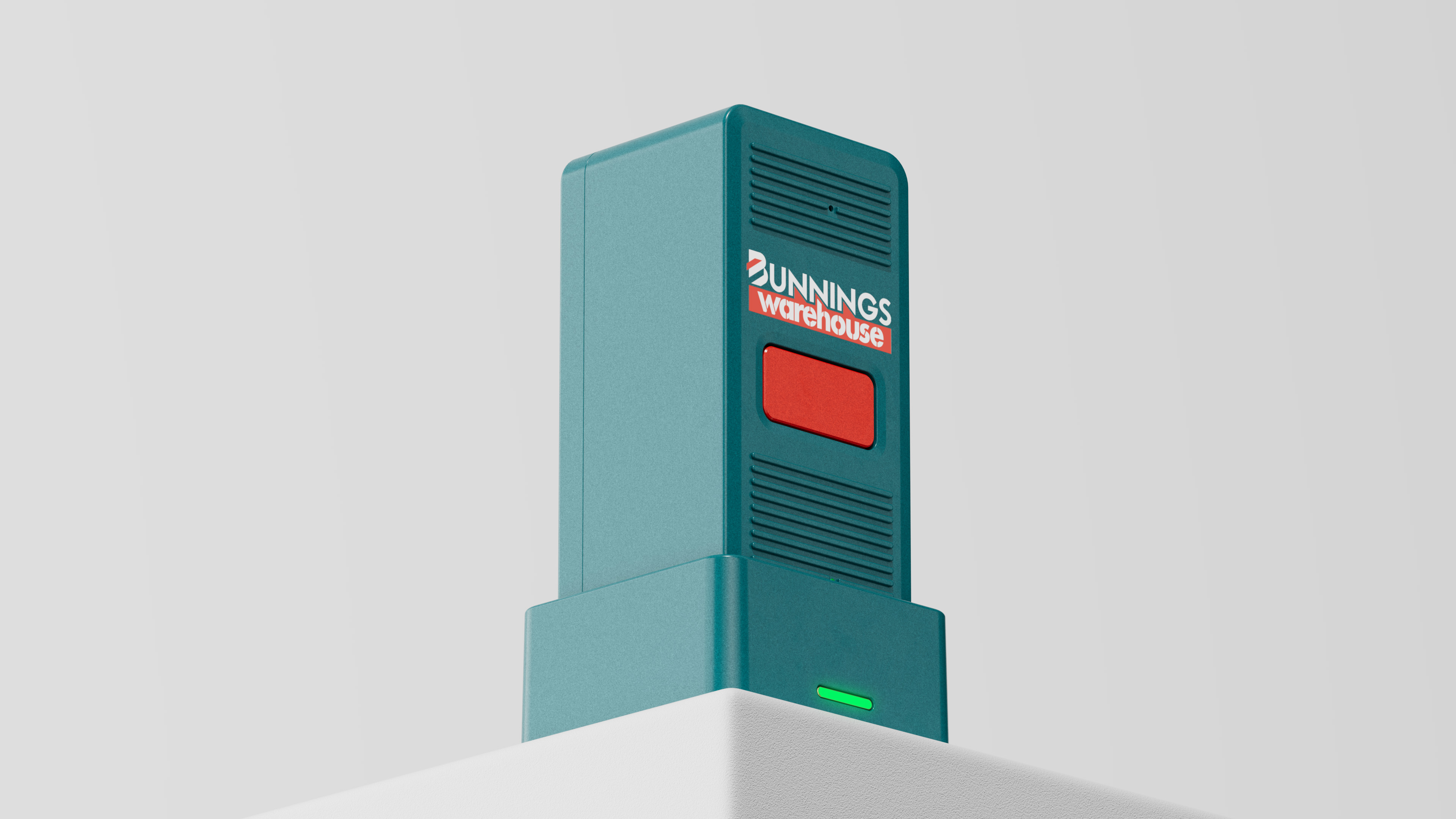
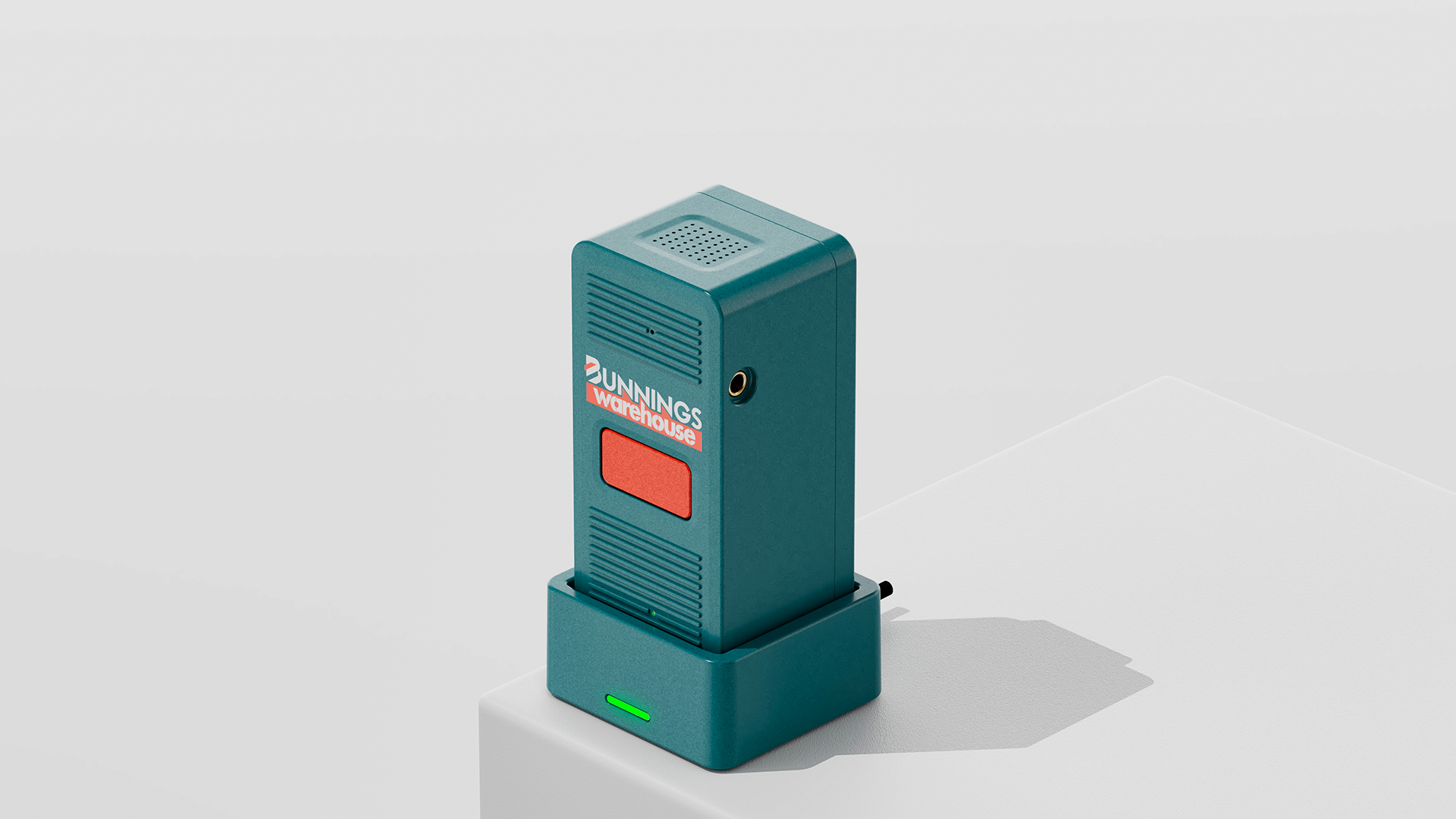
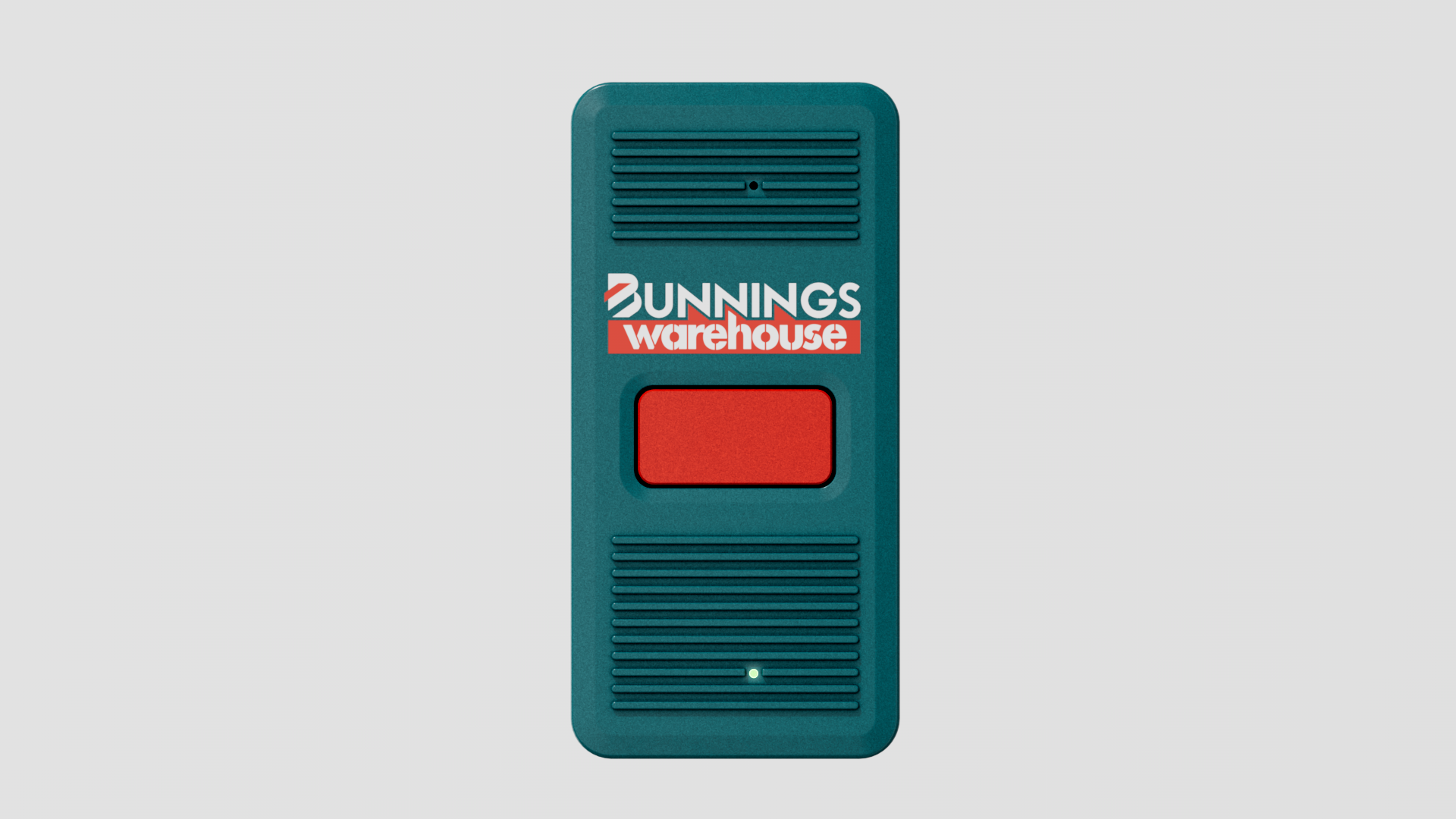
Tekt built the full SIP gateway and the AI voice-command-triggered call initiation system, along with the industrial design, the audio subsystems and the software around them. All of it was done in house.
Each endpoint ran on a Raspberry Pi Zero W with an AI coprocessor alongside it. That combination buys wireless connectivity and a full Linux stack without paying the power and size penalty of a larger board, and puts enough inference next to the audio hardware to recognise a spoken command on the device.
Five endpoints
The solution was built out to five endpoints as a small trial and demonstration system — sized not to serve a store, but to let Bunnings understand the capability at an early stage of product maturity, which is precisely what a proof of concept is for. Five endpoints are enough for real people to hold real conversations across a real building, which is the only way voice control gets evaluated honestly.
The answer
Bunnings did not proceed.
The evaluation was whether Bunnings or a local manufacturer could commercialise the technology against existing commercial offerings. Against those, the AI voice control was the less mature half of the comparison, while the alternatives' commercial offer and proven low-risk scale already existed. On business case and on needs, the alternatives won. Bunnings parked the technology as not ready for deployment at that time and continued its national site expansion.
That is a successful proof of concept. A PoC exists to buy a decision cheaply, and this one produced a well-evidenced no before anyone committed to a build. Bunnings got a data-backed decision, which is what it came for.