The challenge
Carbon Cybernetics were pioneering an implantable electrode array built from carbon fibre, the fibres a fraction of the width of a human hair and anchored to a diamond substrate through a hermetic feedthrough. Diamond is biocompatible and conductive, which is a rare and useful combination. The electrodes were not ours. What the programme needed was everything between them and a researcher's screen: 32 channels of neural signal acquired from the array, carried off a battery-powered embedded target, and delivered intact to analysis software while a subject was having a seizure.
The work
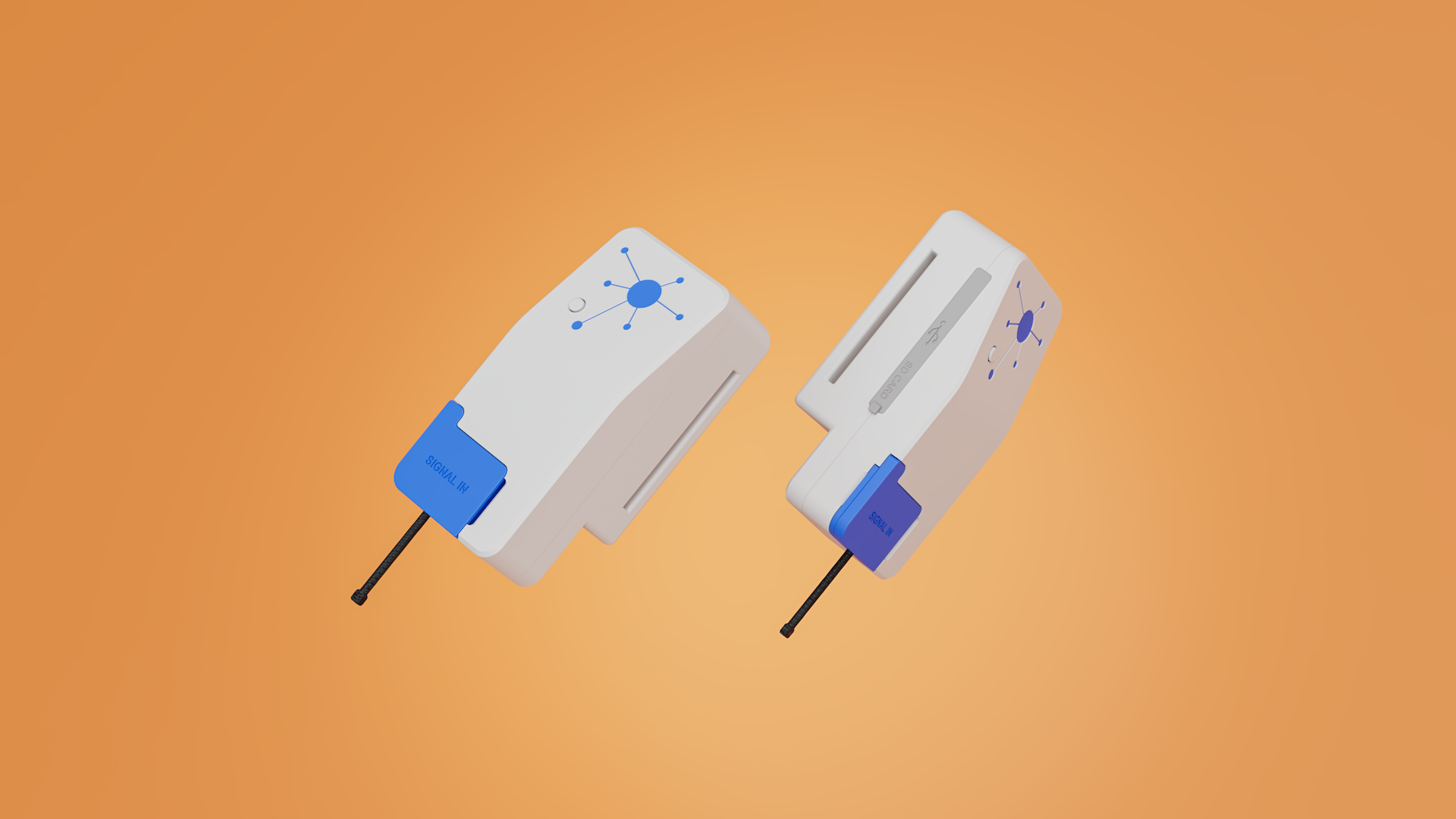
Tekt delivered the custom housing, the data acquisition board, the data streaming PCB, the ESP32 firmware, and the desktop Wi-Fi analysis tool that received the stream.
The analogue front end
The front end was fully differential, with sense lines and virtual ground systems to suppress the bioelectric noise of the subject being measured. The signals of interest sit close to the noise floor, so anything that lifts the floor destroys the measurement. That constraint set the design of the acquisition board and the housing around it.
Getting the data off the device
The hardest part was not the analogue front end. It was streaming 24-bit conversions across 32 channels over Wi-Fi, from a battery-powered embedded target, with guaranteed in-order delivery and no dropped packets. Research data that arrives corrupted or out of sequence is worthless. The system sustained over 12 megabytes per second, and recording sessions ran to 12 hours against a 12-to-16-hour target.
Final delivery was 23 January 2020. The system is still in use as a research tool today.
About the client
Carbon Cybernetics develops implantable electrode arrays for neural recording, built on carbon fibre anchored to diamond. The programme began with the University of Melbourne's physics department and grew into further work with RMIT.