The challenge
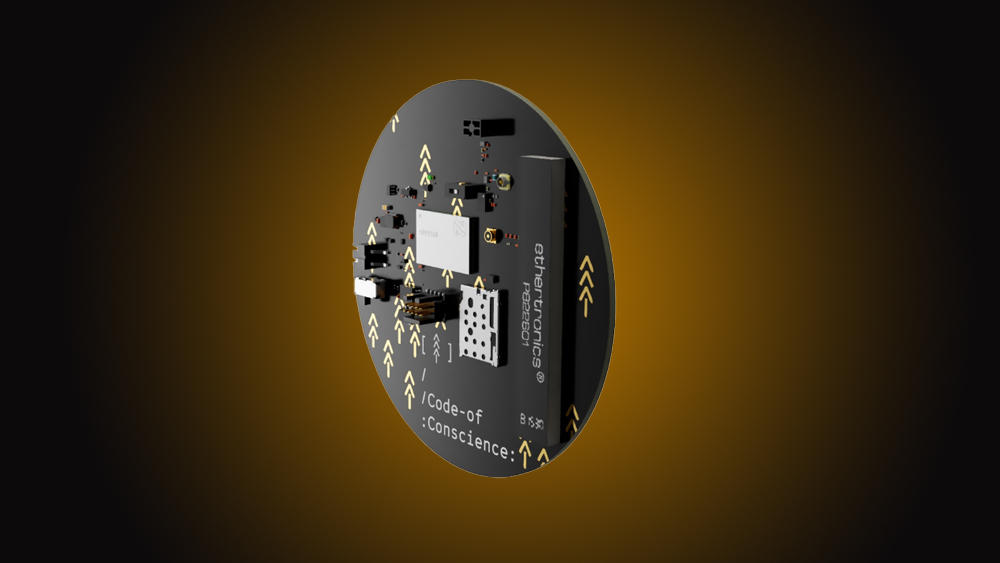
Code of Conscience geofences heavy equipment against the UN World Database on Protected Areas. Cross the boundary and a relay cuts power to the diesel fuel pump. The machine stops.
The initiative came from the agency AKQA, with EIA as the end user, and the deployment target was remote South America — where low-power cellular infrastructure was thin and inconsistent. Tekt ran the programme as a not-for-profit conservation contribution, funded only for materials, and Matt Adams designed the whole hardware proof of concept himself as a solo engineering exercise.
The work
The proof of concept
The device was built on the Nordic Thingy:91, reporting over LwM2M and CoAP to an Eclipse Leshan server at 30-minute intervals. The original brief specified NB-IoT; we requested Cat-M1 instead, on coverage grounds, because of what the deployment geography was likely to offer. Trials in South America produced exactly that learning.
Nordic Semiconductor donated the cellular modules and up to fifteen Thingy:91 development kits. At the time, Tekt was the only authorised Nordic Semiconductor design partner in Australia.
The server side
One finding worth recording: the client's server was running plain CoAP on port 5683 with no DTLS. We flagged it, and it was acted on.
What happened next
The EIA field trial never ran, for political reasons outside anyone's control. The work was revived in 2024 for museum pieces, which shipped and are still on display. AKQA publicly credited "our partners Tekt Industries". The awareness campaign — the larger part of the effort — landed hardest in Europe.