The challenge
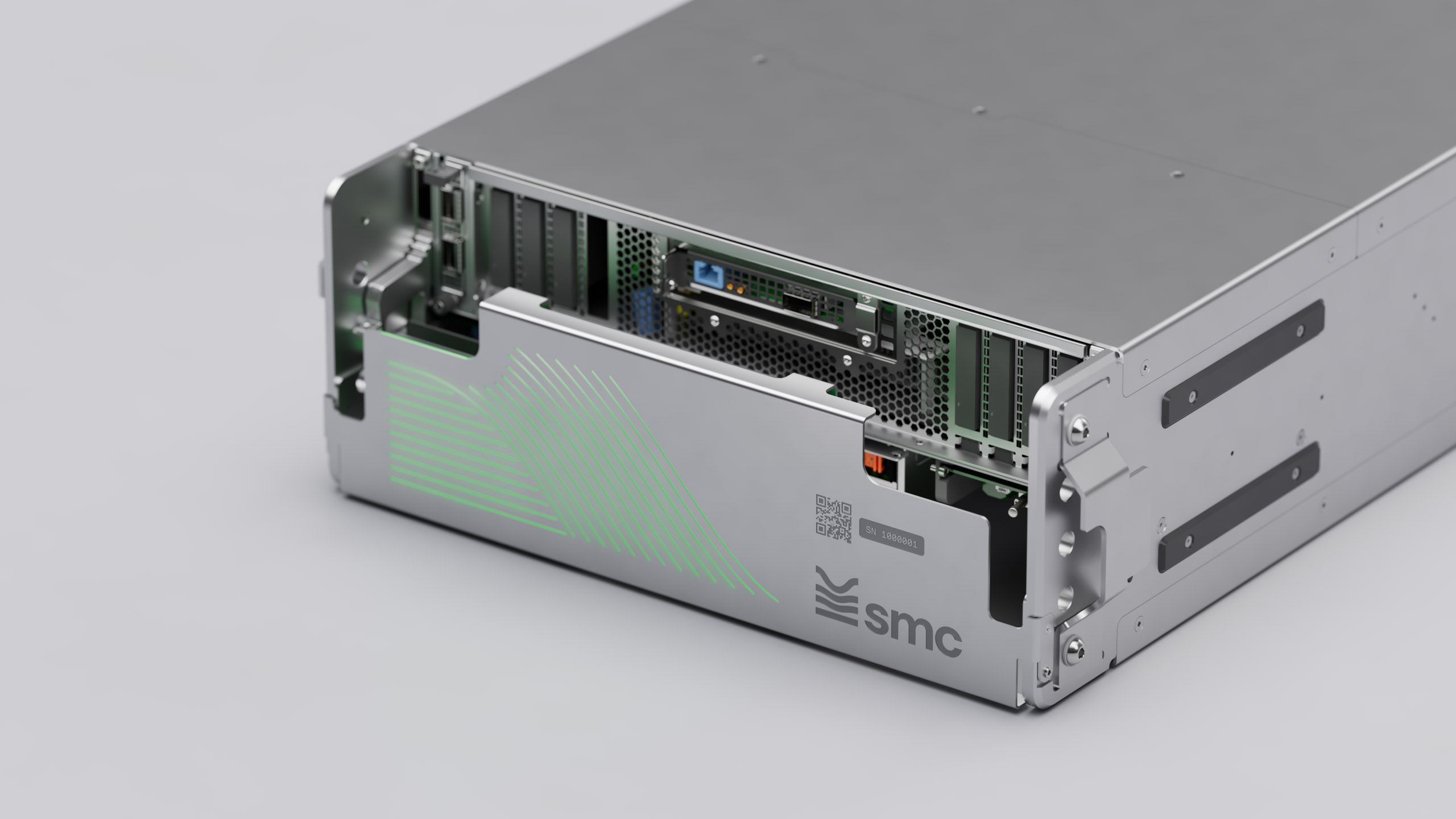
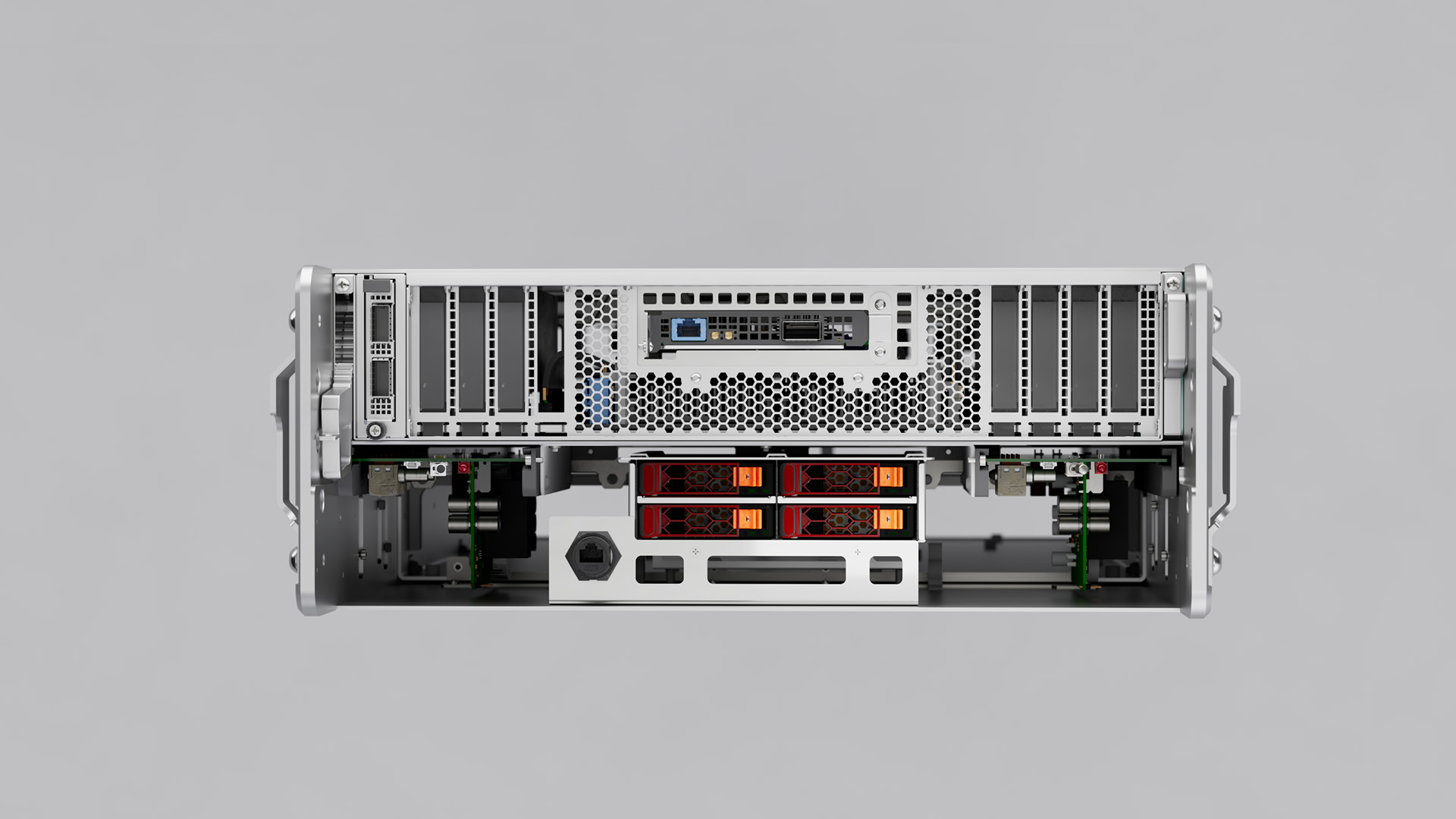
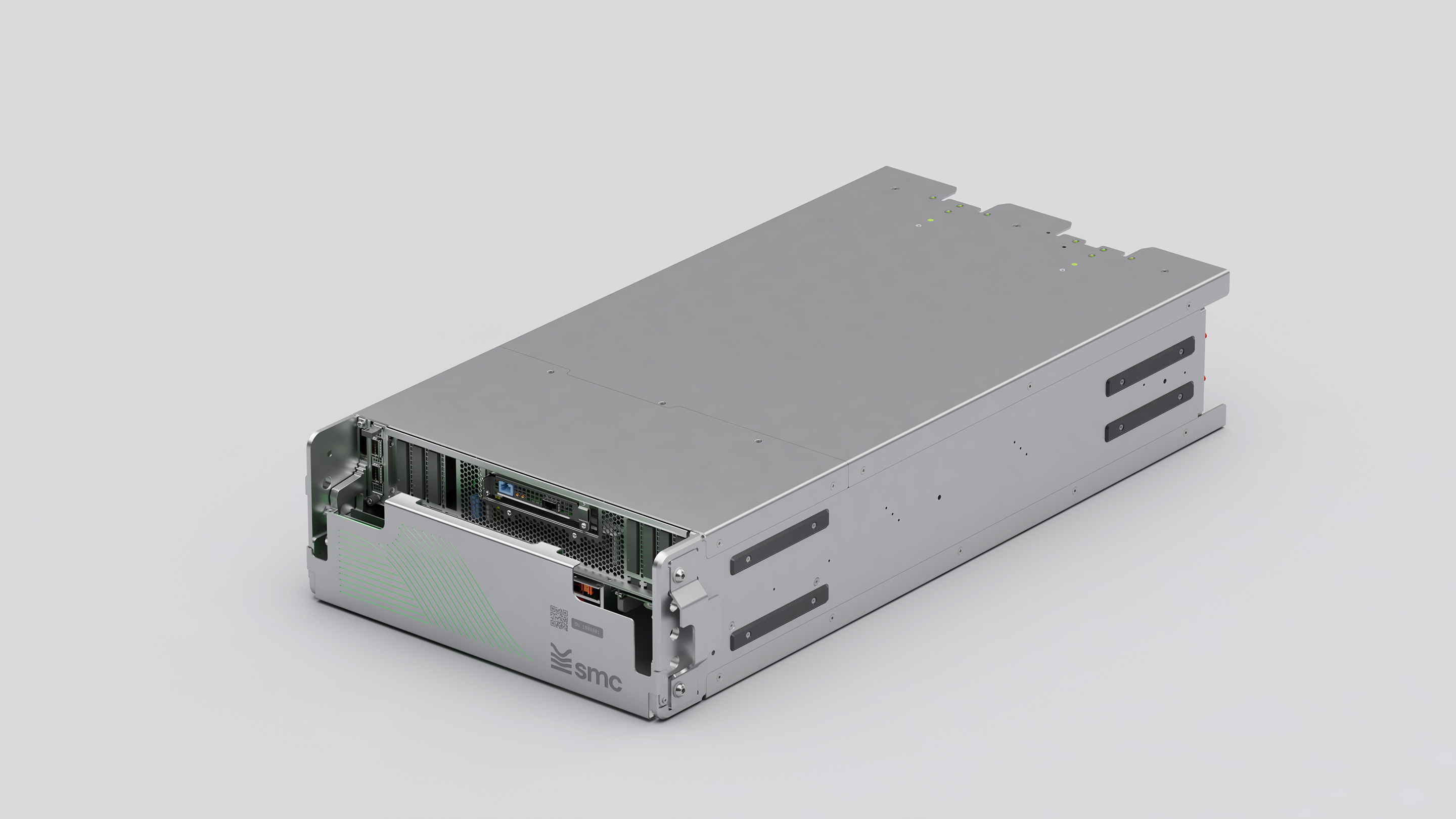
Firmus wanted to submerge Supermicro A100 AI server frames in non-conductive fluid rather than cool them with air. That meant turning the chassis through ninety degrees. An immersion tank cools by convection, fluid rising from the bottom of the tub to the top, so the frame has to sit vertically — the opposite of the orientation Supermicro built it for.
The work
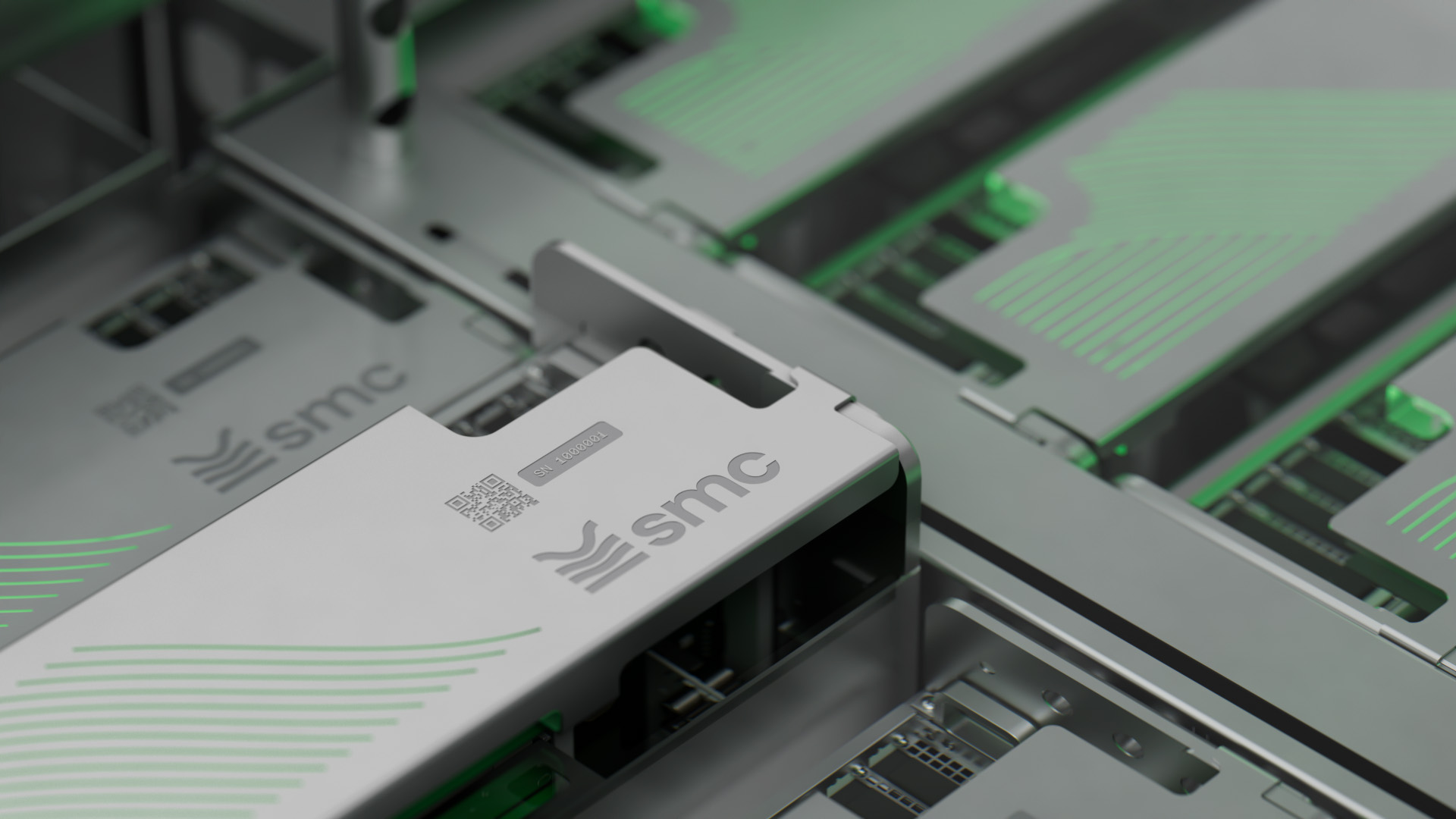
Tekt took on the industrial design and mechanical engineering of the replacement chassis components.
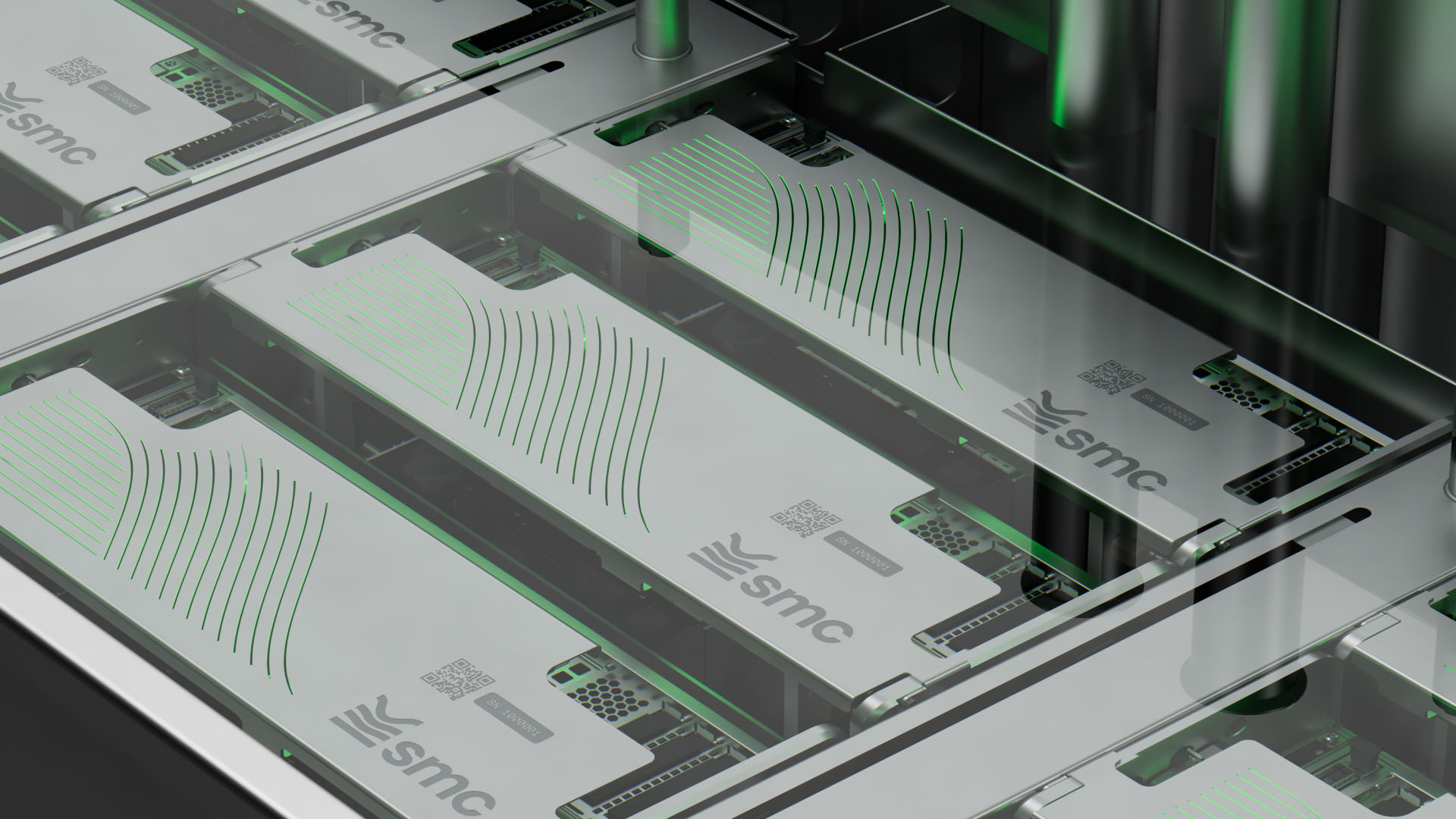
Timing was set by NVIDIA's release cycle, and the project landed on a generational transition while Firmus was standing up its first server farms in Tasmania and Singapore. Two constraints shaped the chassis. The unit is lowered into and lifted out of a fluid tank, so it had to mate precisely to the power rails inside the tub, with sliding trays for serviceability. And every material had to survive permanent immersion in a dielectric fluid that alters the properties of some plastics — with no time to iterate, the selection had to be right first time and stable across the installed life of the frames.
The heat sink
The second phase went after the heat itself. Using finite element analysis and thermal simulation, we developed a 3D-printed copper heat sink optimised for laminar flow and the viscosity of the immersion fluid, mounting on top of the server cards as a retrofit. Its morphology came from generative computational design, with the algorithm shaped by the physics results rather than by a draughtsman. We then hybridised it with a vapour chamber, so the assembly carries the conduction efficiency of printed copper and the transport efficiency of a heat pipe in one part. We are not aware of that combination being done before in an immersion context.
Six prototype chassis were built, followed by a further hundred assemblies. Firmus still runs server farms in Tasmania and Singapore.