
After adopting a dog called Bonnie, Blake and Sarah Horstman wanted somewhere to leave her while they ran errands.
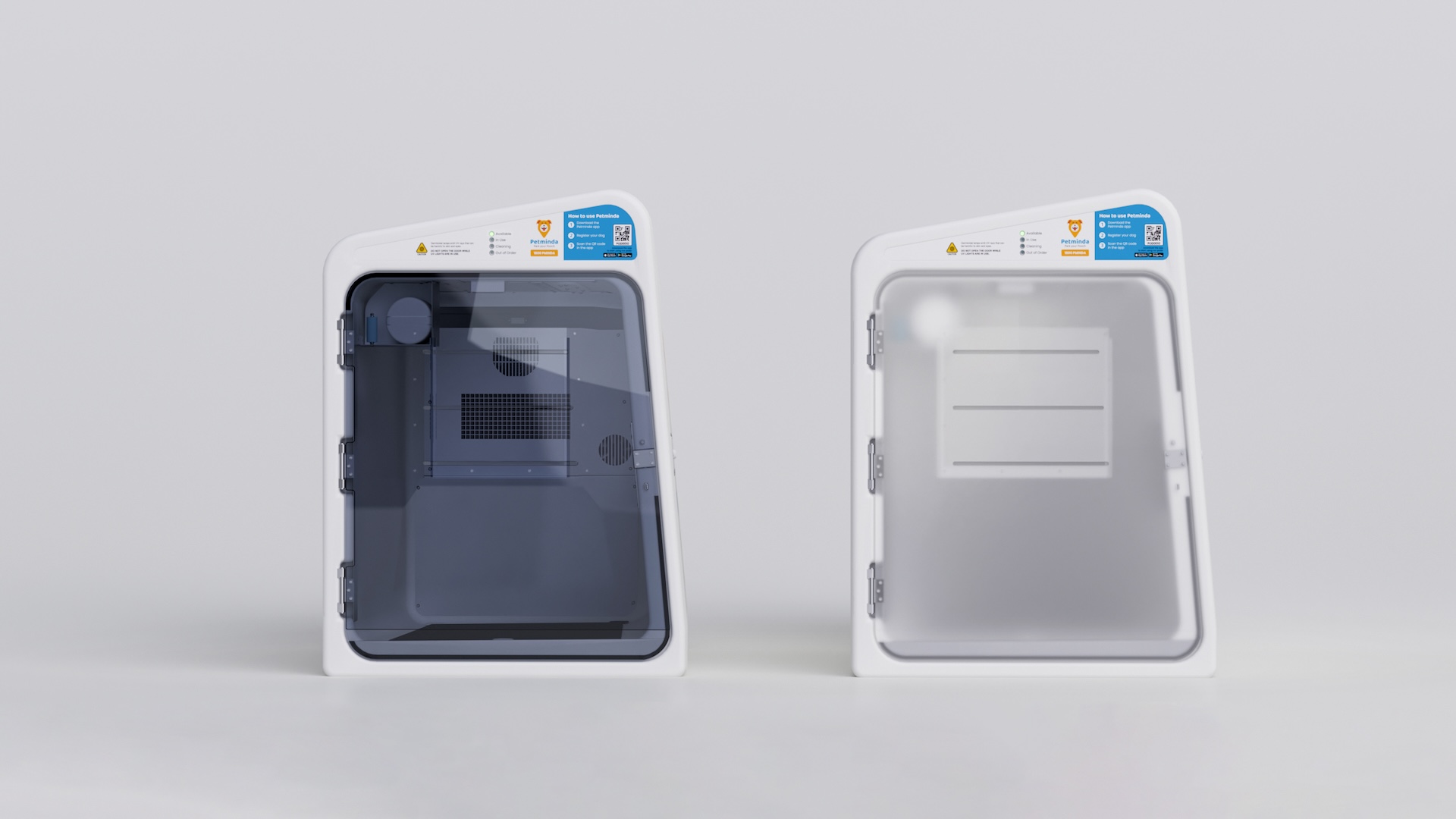
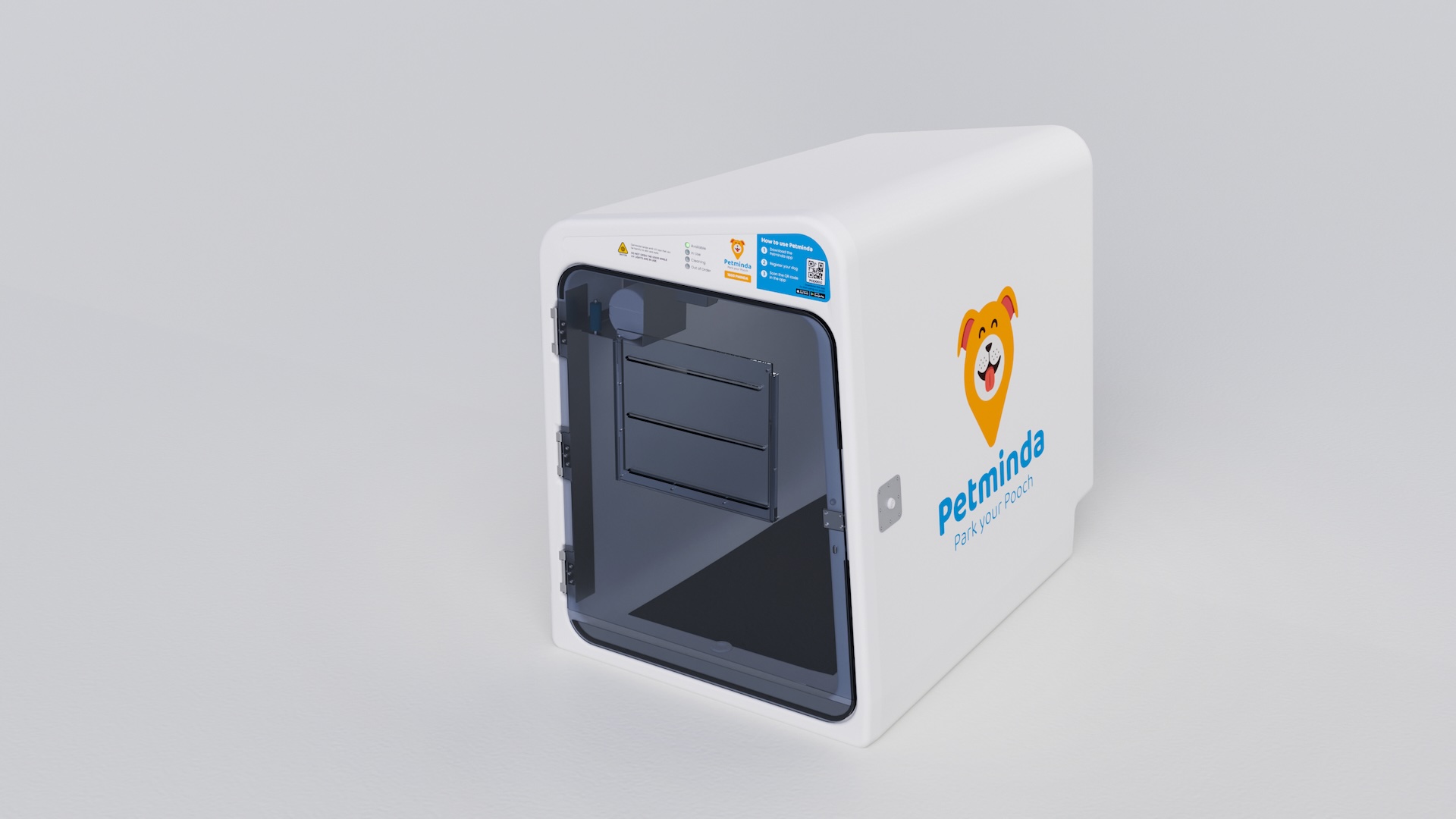
Petminda is the pet hotel they commissioned: an air-conditioned pod in a shopping centre, booked and paid for from a phone and rented by the visit. We designed the pod, its electronics, the app and the cloud platform behind it, and built ten of them.
Petminda's founders saw a gap in shopping arcades and malls: nowhere to leave a pet while you shop. What they wanted was a rentable pet hotel — an air-conditioned, comfort-focused pod where a dog, a cat or another animal could be housed temporarily while the owner shopped, booked and paid for by the visit.
The challenge
A product with no precedent, on a family-business budget
Nothing like it existed to reference or benchmark against, which made almost every part of it a research question rather than a specification.
They also wanted a commercially ready MVP quickly, from one team that could carry the industrial design, engineering, UX and app together. The harder constraint was scale against budget. The pod is a large and complex form to manufacture, it carries a lot of separate subsystems, and it still had to reach a competitive build cost — on the funding available to a family business backed by angel and early-stage investment.
What we built
Almost all of it, from one team
We built almost all of it: industrial design, mechanical engineering, electronics, firmware, the app, a web payment interface and the cloud platform behind them. The one significant bought-in element was the cooling.
The work
The pod, and everything inside it
The pod
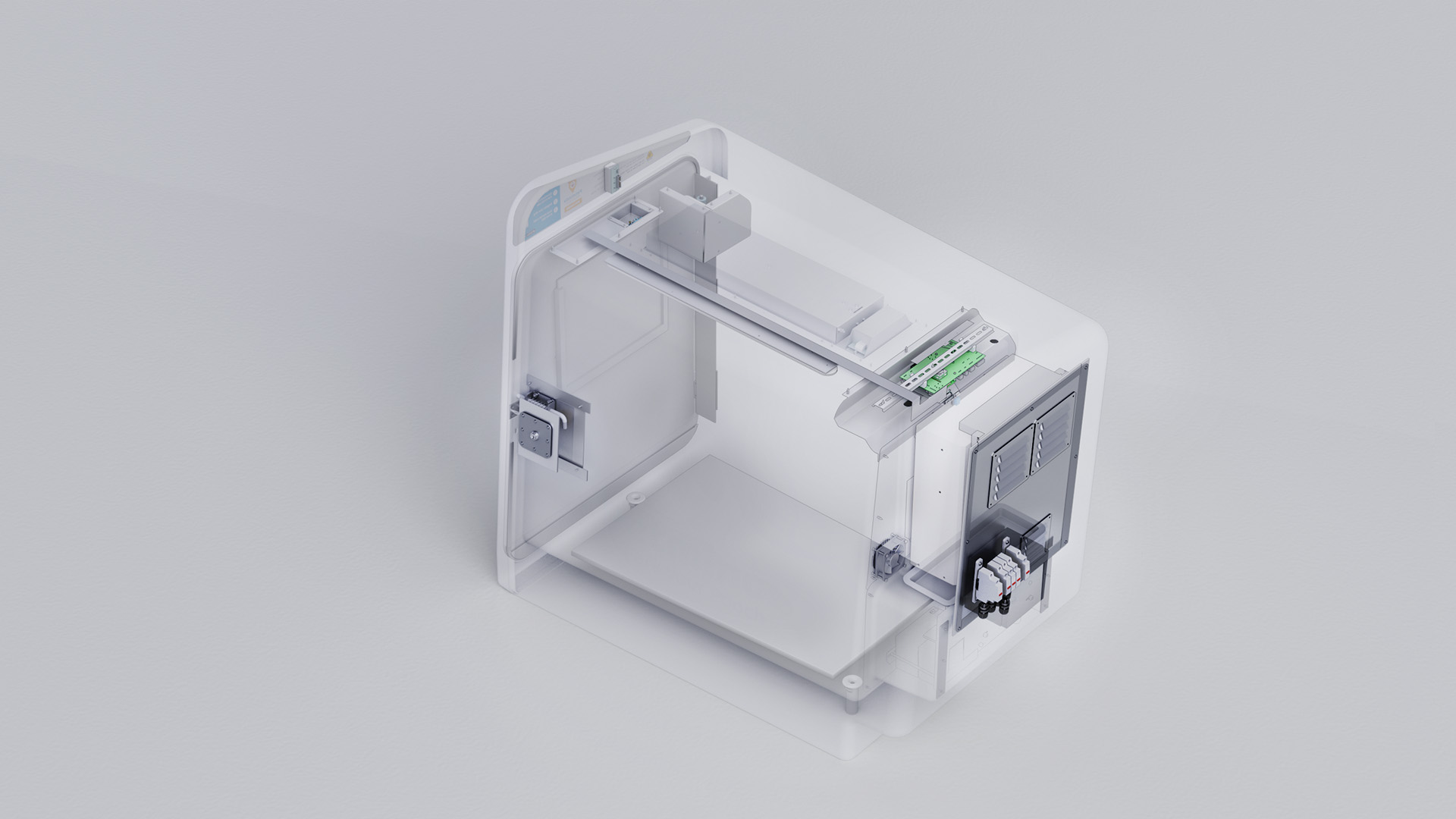
The enclosure is a large fibreglass composite with foam inserts, roughly 1.4 m tall and sized to house a Great Dane. Cooling is an off-the-shelf Peltier industrial unit, integrated into the pod and sized for Melbourne's temperature range. The pods also carry UVC disinfection.
Electronics and firmware
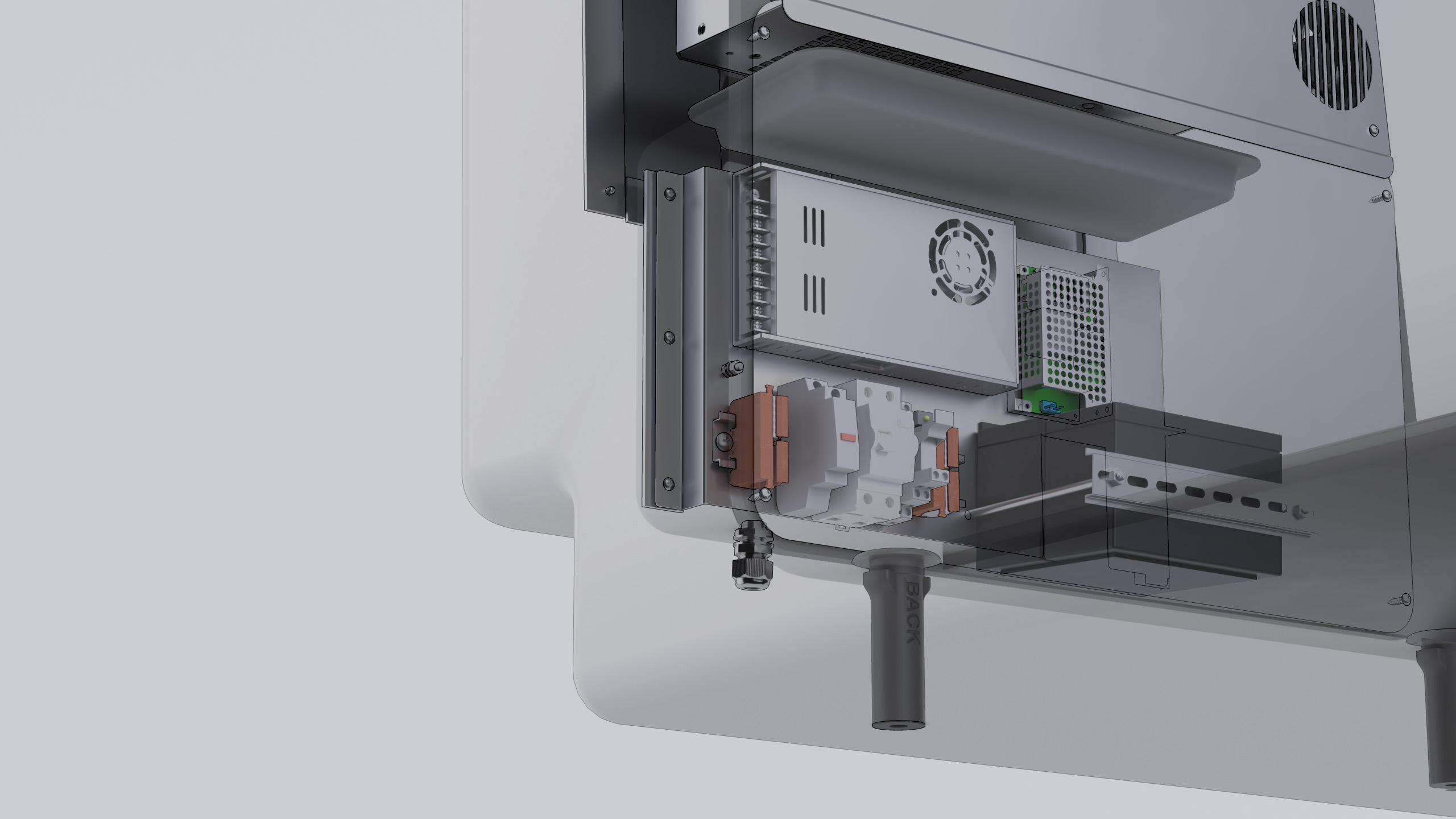
A Raspberry Pi Compute Module 3 runs the local system inside each pod, connected over Wi-Fi. Sensors track temperature and motion, vacancy sensing flags a pod for cleaning, and video is recorded inside for the owner.
Technologies
- Wifi
- Raspberry Pi Compute Module 3
- Google Firebase
- Google Cloud IoT Core
- Flutter
- Stripe
- OTA Update
- Peltier Cooling
- Temperature Sensing
- Motion Sensors
- Video Monitoring
App development
One Flutter codebase, one Firebase back end
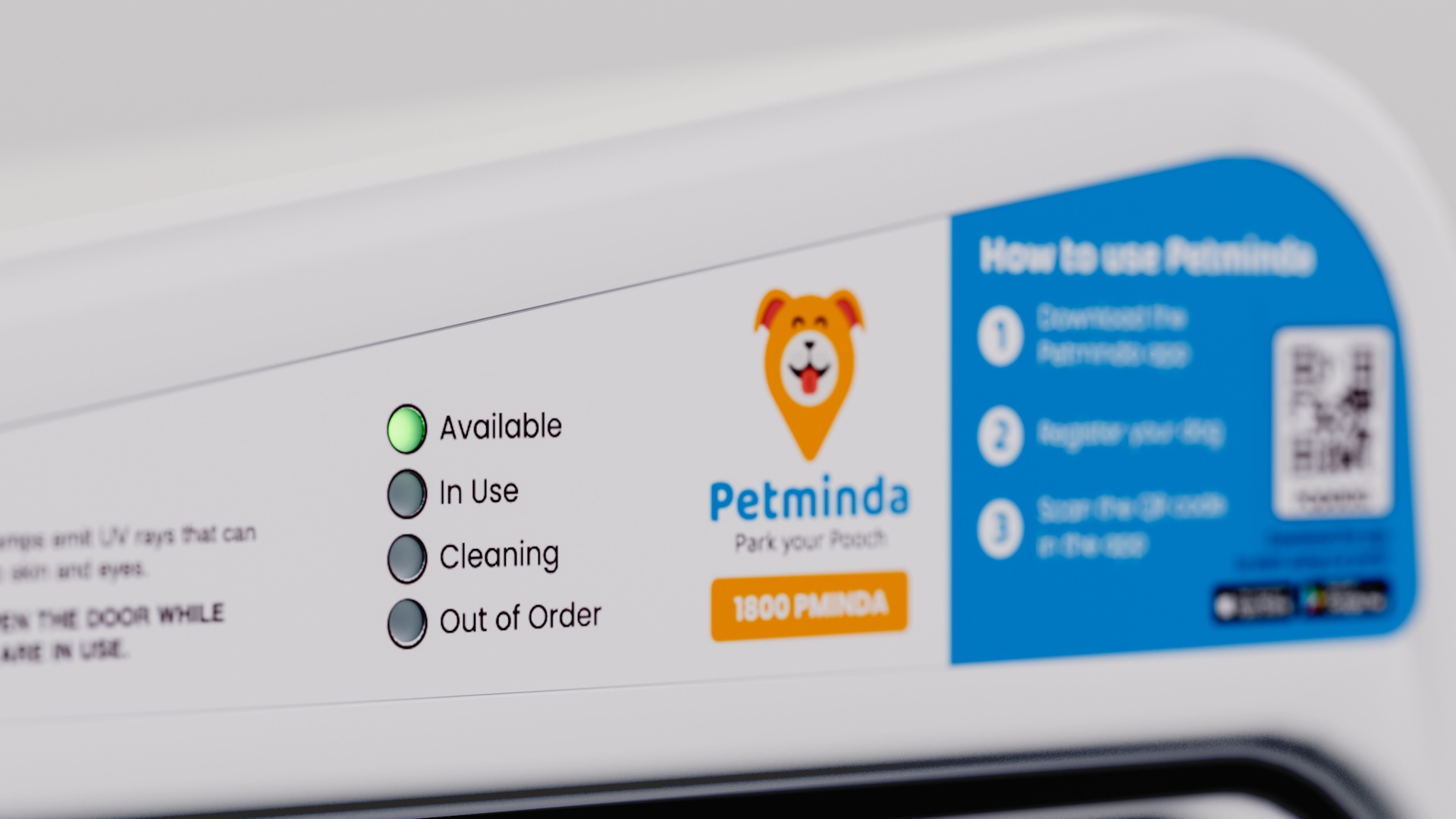
Renting a pod is a phone transaction, so the app is the product as far as the customer is concerned. We designed and built it in Flutter, as a single cross-platform codebase, and it talks to the same Firebase back end the pods report into: the customer books a pod for the visit and pays for it from the phone, through Stripe.
A web payment interface covers the payment path in a browser. On the operator's side, Twilio SMS alerts pod administrators.
What the app does
- Book a pod for the visit
- Pay from the phone, through Stripe
- Reports into the same Firebase back end as the pods
- Twilio SMS alerts for pod administrators
The cloud platform
Fleet management, not just a back end
The cloud side is Google Firebase with Google Cloud IoT Core ingestion, carrying detailed analytics alongside the booking and payment data. It also does fleet device management and over-the-air firmware update — keeping deployed pods managed and updatable was a significant exercise in its own right, on top of the pod engineering.
Building ten
Ten pods, built and deployed in under nine months
We CNC-machined a plywood prototype first and used it to prove the systems and the air conditioning while the first fibreglass shell was fabricated, then built the balance as ten deployable pods. Tekt manufactured all of the electronics in house; a local fibreglass fabricator made the housings.
Hardware, firmware, app and cloud came together in under nine months, and the programme reached a production-ready, low-volume scalable state in two rounds of engineering.
The first pods went into service at Barkly Square in Brunswick in July 2021, with further sites at Highpoint and Victoria Gardens following.
"fully automated pet pods to keep your pooch safe while you shop"
Delivered
- 10deployable pods built
- < 9 monthshardware, firmware, app and cloud
- 2rounds of engineering to production-ready
- 1.4 mpod height, sized to house a Great Dane
About the client
Petminda
Petminda was Blake and Sarah Horstman's answer to their own problem. It was a family business, funded locally by angel and early-stage investment rather than by a corporate parent, and that funding envelope shaped the engineering as much as the brief did.
On the strength of the trial the founders sought further investment, and the business was later sold offshore, to a UK buyer.
Other case studies
View all case studies → Advanced ManufactureFliteboardIn 2016 Flite founder David Trewern wanted to get out on his kitefoil, but there was no wind. The idea that followed — a hydrofoil surfboard running on clean, quiet electric power — reached Tekt in 2017 as a set of first prototypes, and the task was the distance between those prototypes and a production-ready design.Read the case study →
Ready to reach out?
If you have an electronic product idea but lack the knowledge, time or resources to make it happen, we can help.
↑ Back to top