
Military
Silentium Passive Radar

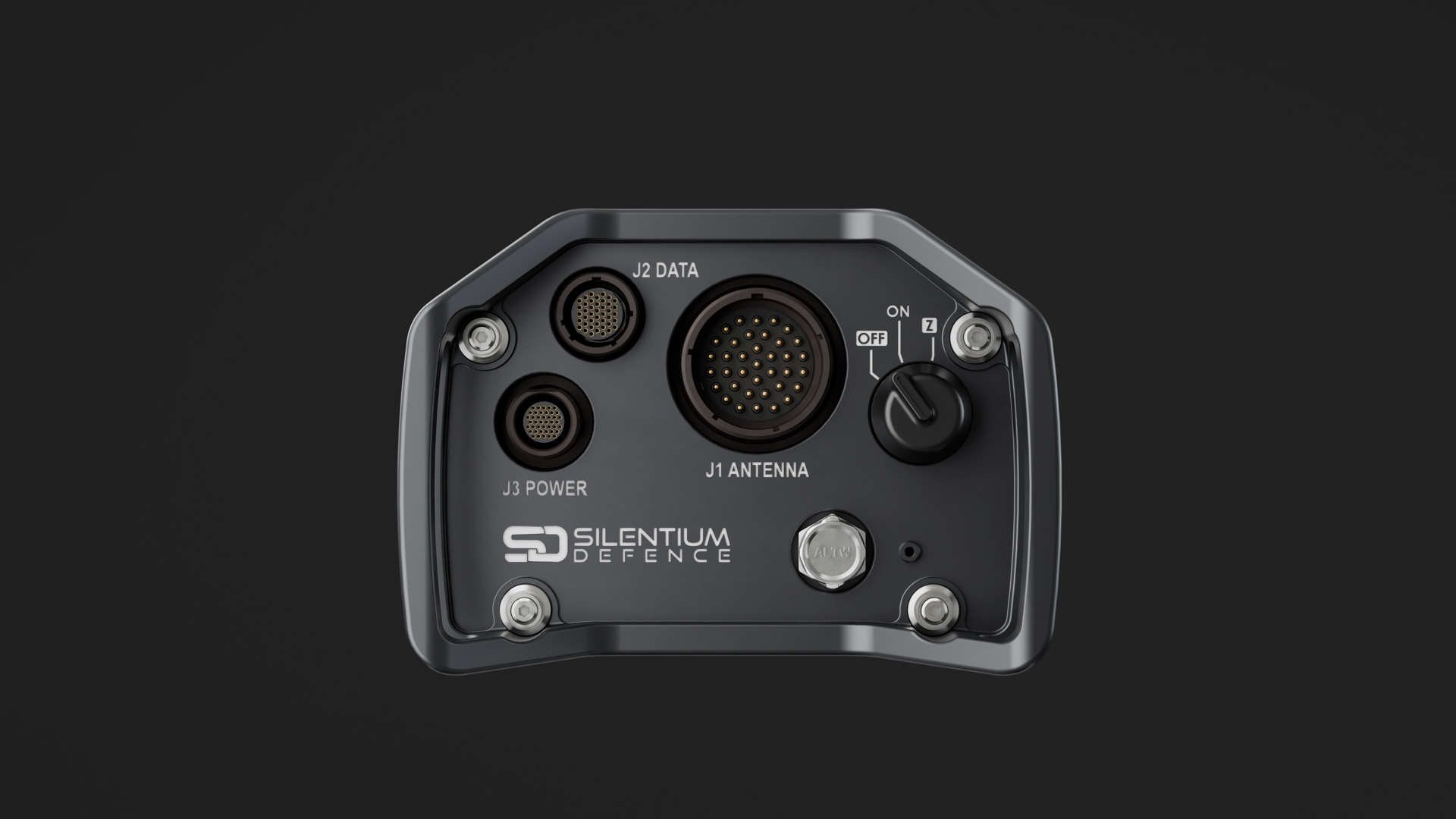
Passive radar transmits nothing, so nothing can detect it. Silentium Defence had one working as a rack of off-the-shelf parts. Tekt made it something a soldier could carry — sealed to IP66, passively cooled, battery powered, and exceeding the performance of the rack it replaced.
The challenge
Tekt was introduced to Silentium Defence through Design and Industry (D+I), the industrial design partner on the program. Silentium came to us with a passive radar system running on off-the-shelf components with limited customisation, and a commercial proposition: build a portable, field-deployable, IP66, passively cooled version that exceeded the existing performance at significantly reduced size — suitable for battery-powered operation, and for military personnel to carry into remote areas of Australia and overseas for surveillance and detection.
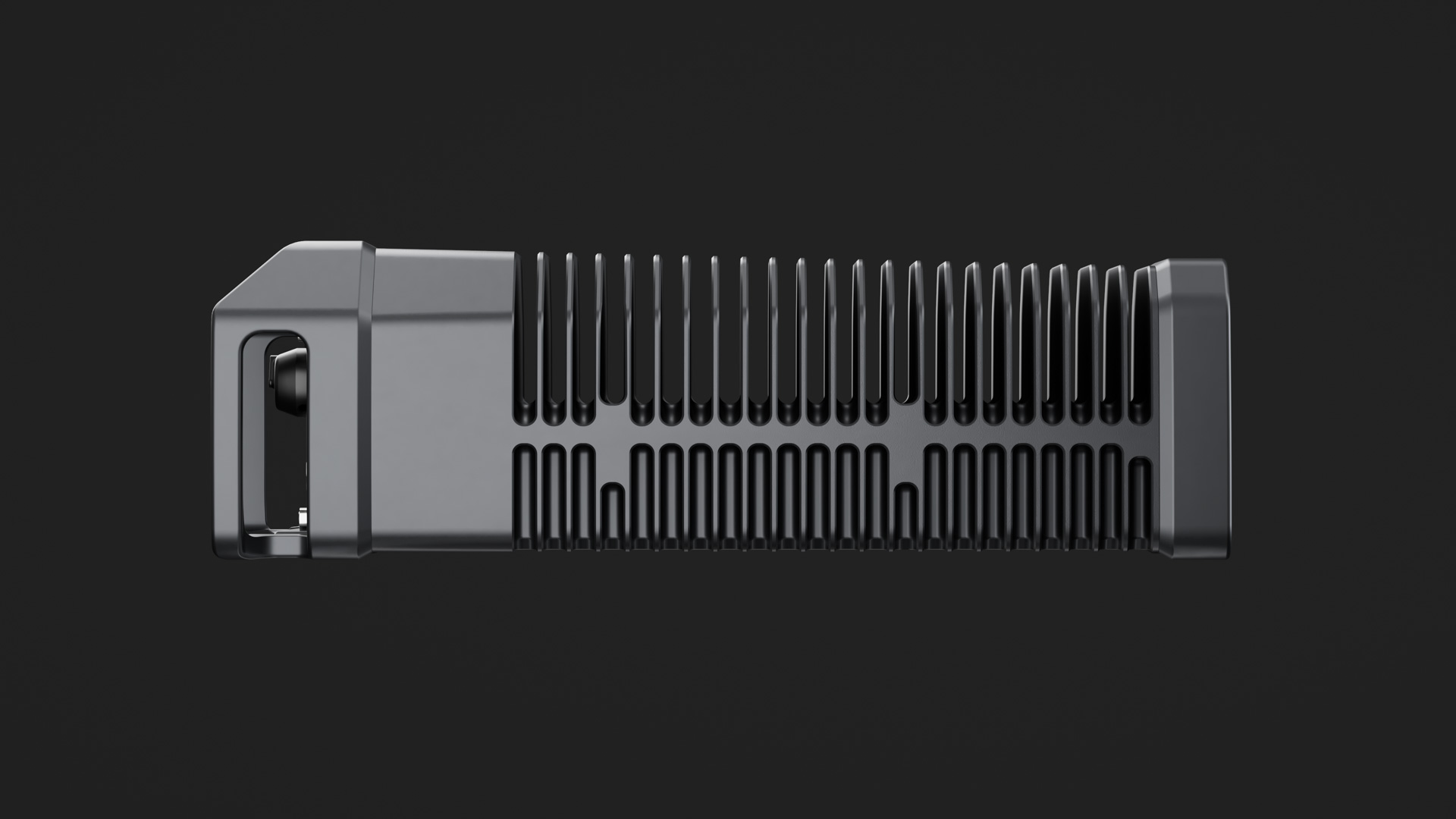
IP66 and passive cooling together is a hard combination. The enclosure is sealed, so there is no airflow, and the heat from the RF and the processing still has to go somewhere.
The work
A sealed enclosure that cools itself
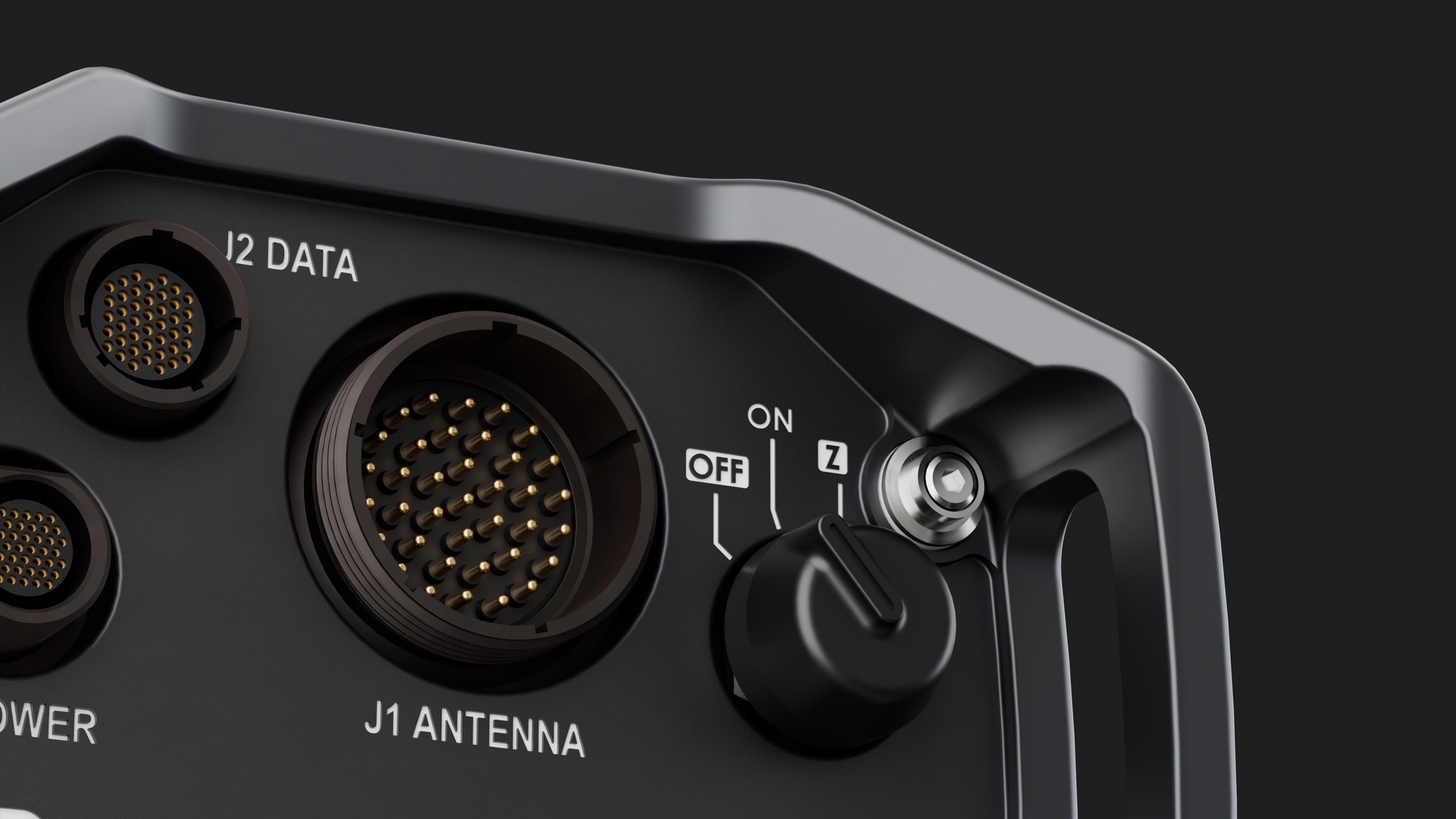
We consulted directly on the electromechanical design, evolving the thermal solution so D+I could meet the passive cooling requirement, and recommended the interface and electromechanical approach — filling the electronics knowledge gap, as D+I had no internal electronics capability at the time.
The M8 processing system
On the M8 itself we developed a full custom sixteen-layer HDI back-drilled backplane, with carrier boards and modules implementing the RF amplification, the processing and the networking. Back-drilling removes the unused via stub so it cannot act as a resonant antenna and degrade the signal — the right call for mixed high-speed RF and digital on a board of that layer count and interconnect density.
We delivered the full wire harness and cabling, the electronics hardware, and the supporting firmware subsystems and board support packages, so Silentium could build their own application-specific passive radar intellectual property on the platform.
The phased array masthead
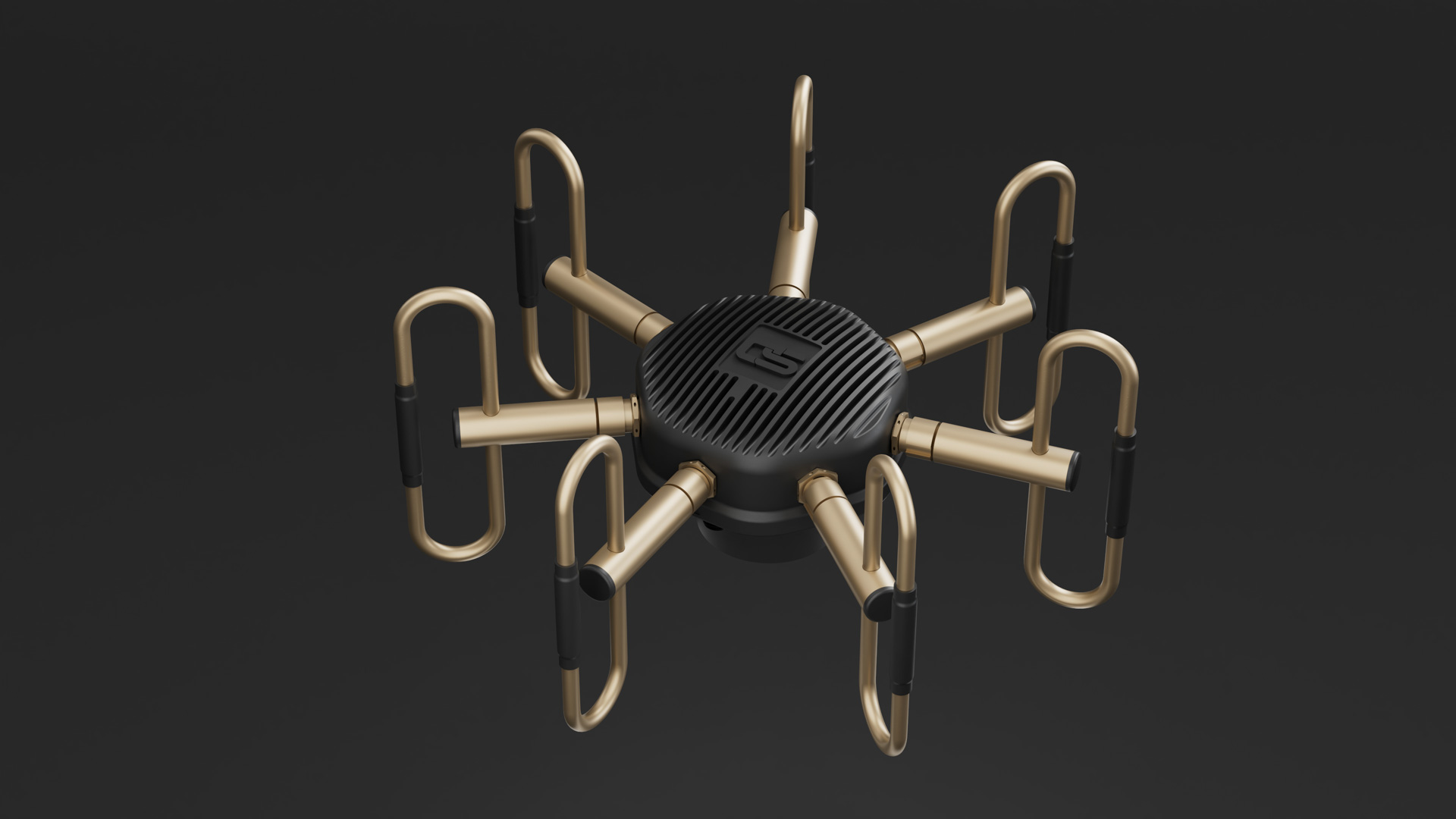
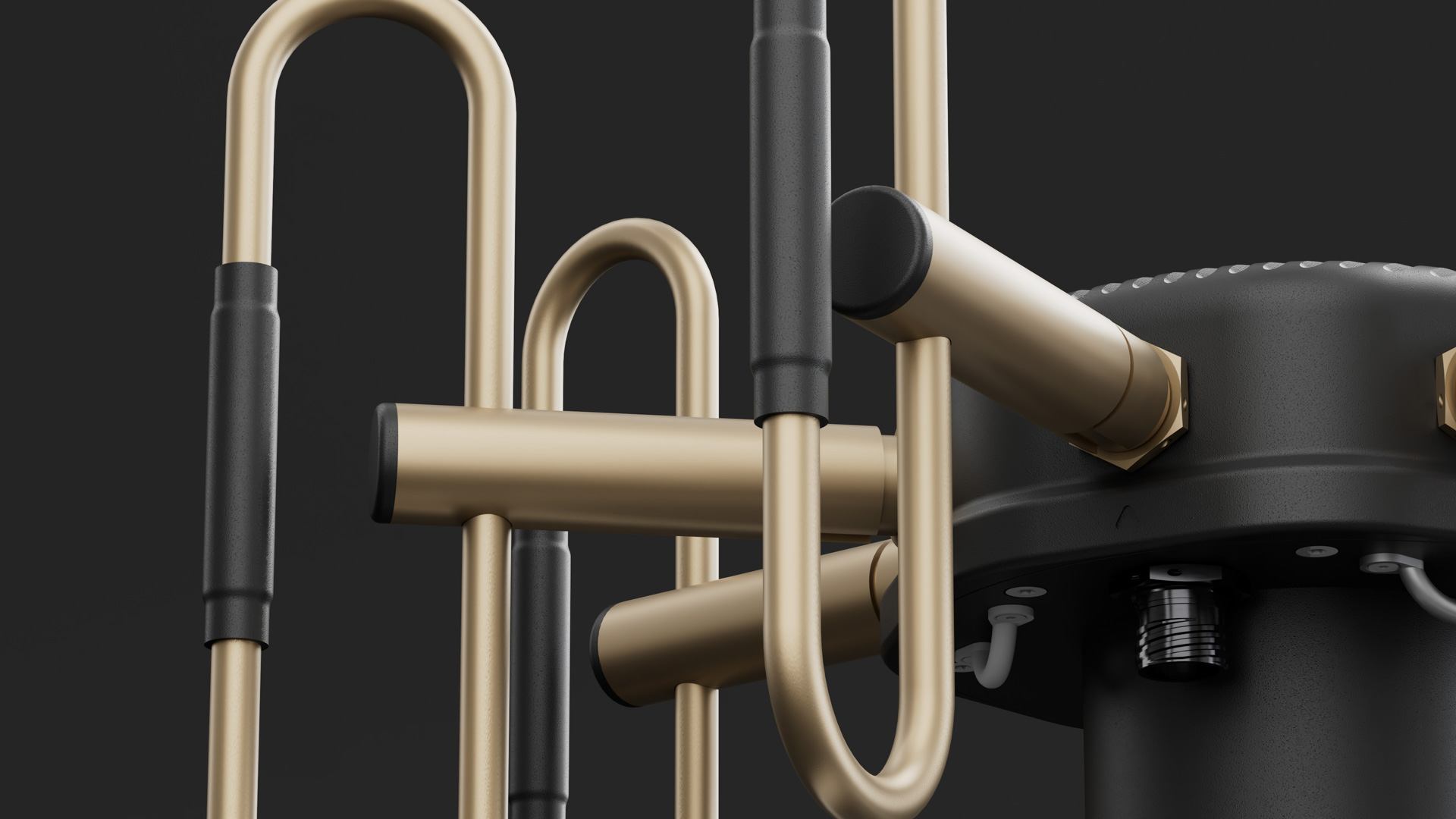
The masthead is the other half of the system, and the half where Tekt's scope was widest. Silentium had an RF phased antenna array working as a proof of concept. We evolved it into a waterproof, ruggedised design manufacturable at larger scale and to higher-precision parts — the difference between an array that demonstrates a principle and one that can be built repeatably and sent into the field.
Industrial and mechanical design, in house
On this element Tekt delivered the full industrial design and the mechanical design. That is worth saying plainly because it is unusual in this portfolio: on the M8 we consulted alongside Design and Industry as the industrial design partner, whereas the masthead was ours end to end, form and structure together.
Those two are not separable on an antenna. Every element's position, spacing and orientation is an electrical decision before it is an aesthetic one, and the housing that carries them has to hold that geometry through transport, weather and handling. The elements meet the sealed hub through flanged fittings, and the same sealing discipline the M8 needed applies here — an antenna that admits water stops being an antenna.
A unique RF implementation
The RF side was not an off-the-shelf array with a case around it. We built it as a collection of subsystems that together achieve the phased array functionality, which is what let the electrical design and the mechanical design be resolved against each other rather than one being handed the other's leftovers.
It is a critical piece of the remote deployment system, and it pairs with the M8 as a complete passive radar implementation: the masthead hears, the M8 makes sense of what it heard.
Manufacture and sovereign capability
Beyond design, Tekt manufactured. We are proud of our ability to fabricate low-volume, extremely high-complexity electronics, and we supported Silentium's manufacturing through five years of early trials and the fabrication of their first commercial offering — the product that broadened their reach into the US and European markets while supporting Australian Defence Force capability, as part of a fundamental commitment to sovereign capability in advanced electronics and passive radar.
About the client
Silentium Defence, based in Adelaide, builds passive radar systems for surveillance and detection — sensing that transmits nothing of its own. The company has since grown beyond a hundred employees and is expanding rapidly into overseas markets.
Ready to reach out?
If you have an electronic product idea but lack the knowledge, time or resources to make it happen, we can help.
↑ Back to top